How Arcade Factories Maintain Quality Across Bulk Orders
Explore how arcade machine factories maintain consistent specifications, components, assembly standards, and quality records across bulk equipment orders.
Introduction
Ordering arcade machines in bulk creates different purchasing challenges from buying a single unit. Distributors, importers, and entertainment venue operators need machines that match the agreed specifications, not just in appearance but also in functionality and configuration.
Consistency becomes especially important when an order contains multiple units of the same model or equipment intended for several locations. A structured factory process helps reduce avoidable differences between finished machines.
Why Bulk Order Consistency Matters
Protecting Product Uniformity
When buyers order multiple arcade machines of the same model, they usually expect consistent cabinet designs, controls, screen arrangements, and operating features. Unexpected differences can complicate installation and daily management.
Supporting Multi-Location Operations
Distributors and entertainment operators may install similar machines across several venues. Consistent equipment configurations can simplify staff training, spare parts identification, and maintenance procedures.
Reducing Purchasing Disputes
A written specification provides a common reference for both buyer and manufacturer. Without clear documentation, different interpretations of product features may lead to disagreements during final inspection.
Consistency should be evaluated against the approved order configuration rather than a general expectation that every machine produced by a factory is identical.
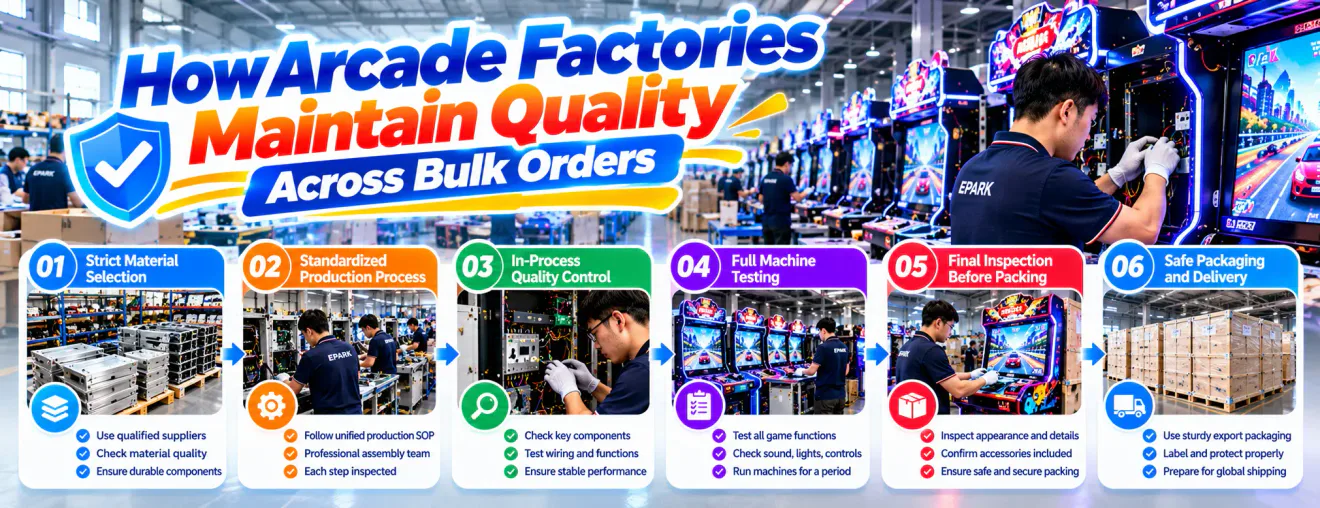
Establish Clear Production Specifications
Confirm the Exact Machine Model
Each bulk order should identify the selected machine models, quantities, and agreed configurations. Product names alone may not describe every included feature or optional component.
Document Technical Requirements
Relevant details may include dimensions, voltage, screen size, player capacity, payment configuration, and installed controls. Buyers should confirm these requirements before production begins.
Approve Customized Designs
Custom artwork, cabinet colors, logos, and interface languages should be approved using clear reference materials. The factory can then compare finished units with the confirmed design.
For mixed orders, separate configuration records help prevent details from one model being incorrectly applied to another.
Control Components Across Production Batches
Use Confirmed Component Specifications
Electronic boards, displays, motors, buttons, and other components should match the approved product configuration. Consistent component selection helps maintain expected machine functions.
Review Component Substitutions
Component availability can change during purchasing or production. Any proposed substitution that affects agreed specifications should be evaluated and approved before use.
Maintain Component Identification
Part numbers, model references, and relevant supplier information can help production teams identify the correct components for each machine.
Organized component records also support future spare parts requests and technical troubleshooting.
Standardize Arcade Machine Assembly
Follow Model-Specific Instructions
Assembly procedures should reflect the design of each arcade machine. Racing simulators, claw machines, redemption games, and interactive equipment require different components and installation steps.
Verify Connections During Assembly
Staff should check relevant connectors, control devices, mechanical assemblies, and other installed components according to the applicable work instructions.
Review Cabinet Assembly
Cabinet panels, access doors, protective covers, and decorative parts should be fitted according to the approved design. Visible assembly differences may indicate a need for adjustment.
Consistent assembly procedures make it easier to identify deviations before the equipment reaches final inspection.
Manage Customization Across Multiple Units
Keep Artwork Versions Organized
A bulk order may contain several branding variations or different cabinet designs. Clearly identified artwork files help prevent the wrong graphics from being applied.
Confirm Payment System Requirements
Some buyers require coin acceptors, token mechanisms, card systems, or other payment configurations. The factory should confirm which arrangement applies to each model.
Track Special Configuration Requests
Language settings, control options, and other available custom features should be recorded against the relevant units or production groups.
Buyers should approve important configuration changes in writing to avoid confusion during production and shipment preparation.
Inspect Machines During Production
Check Important Assembly Stages
Inspection during production can identify issues before additional components are installed. The appropriate checkpoints depend on the product design and factory procedures.
Review Visible Product Quality
Cabinet finishes, graphics, panel alignment, and accessible components can be examined for obvious differences from the approved requirements.
Record Identified Problems
When an issue is found, staff should document the problem and the corrective action. Records help determine whether the issue affects an individual machine or a wider production group.
Corrected equipment should be reviewed again where necessary before moving to the next production stage.
Verify Functional Consistency
Test Core Gameplay Functions
Finished machines should be checked according to their intended gameplay. Controls, displays, sound, sensors, and relevant mechanical functions may require different tests.
Compare Machines Within the Order
For orders containing multiple units of the same model, inspection should consider whether the machines operate according to the same approved configuration.
Check Optional Features
Motion functions, lighting effects, payment devices, and other optional features should be checked when included in the purchase agreement.
A functional inspection should confirm agreed features without assuming that every machine supports the same options.
Prepare Bulk Orders for Shipment
Match Units With Packing Records
The factory should verify models, quantities, and package identification against the confirmed order. This is especially important for shipments containing several equipment categories.
Protect Machines During Transport
Packing arrangements should suit the machine dimensions, construction, and shipping requirements. Appropriate protection helps reduce the risk of damage during handling and transportation.
Organize Accessories and Documentation
Separate accessories, cables, keys, and installation materials should be identified and matched with the correct machines where applicable.
Clear packing information helps buyers organize unloading, warehouse storage, and installation after the shipment arrives.
What Bulk Buyers Should Confirm
Request Written Configuration Details
Buyers should obtain confirmed specifications for each model before production. These documents provide a practical reference for reviewing the finished equipment.
Discuss Inspection Evidence
Depending on the order agreement, buyers may request product photographs, testing videos, or inspection records before shipment.
Clarify Changes and Approvals
The supplier and buyer should agree on how specification changes, component substitutions, or customization revisions will be handled.
Clear approval procedures help protect the original purchasing requirements throughout the order.
How EPARK Supports Bulk Equipment Orders
Discuss Model Selection and Quantities
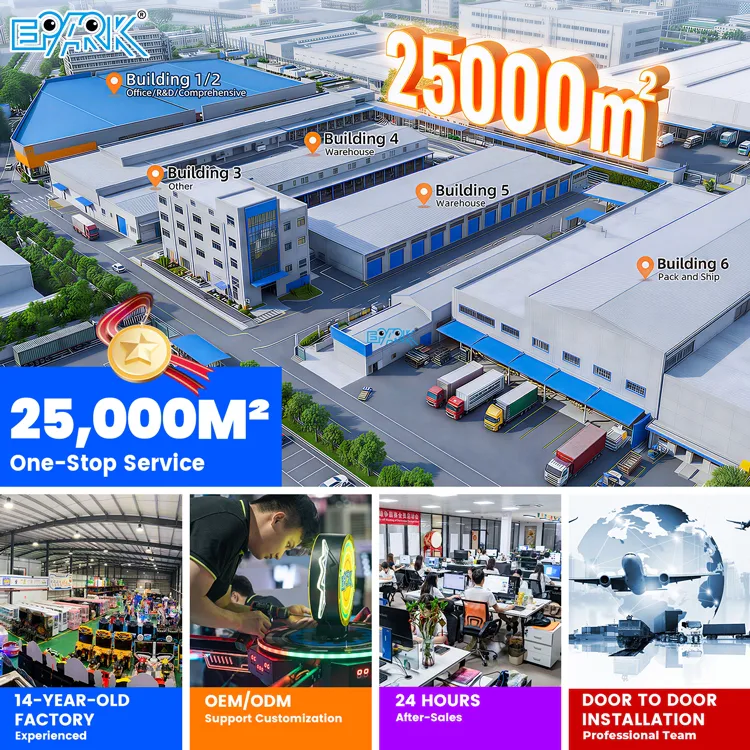
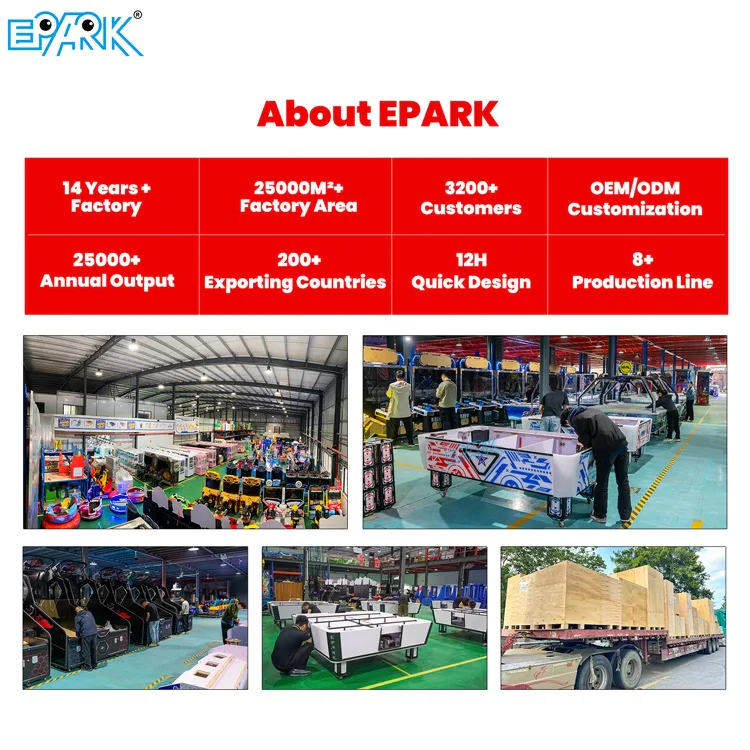
EPARK supplies commercial arcade equipment for distributors, importers, and entertainment projects. Buyers can discuss their required machine categories, quantities, and intended applications before ordering.
Coordinate Customization Requirements
Depending on the selected products, available customization may include cabinet graphics, logos, payment arrangements, and other model-specific options.
Confirm Production and Delivery Details
EPARK can discuss order configurations, production arrangements, packing requirements, and shipping preparation with buyers during the purchasing process.
For bulk orders, confirming the agreed scope in writing helps establish a reference for production, inspection, and delivery coordination.
Conclusion
Maintaining consistency across bulk arcade machine orders requires clear specifications, organized component selection, repeatable assembly procedures, and appropriate inspection records.
For distributors and entertainment venue operators, the most effective approach is to confirm product configurations before production and review how the manufacturer manages changes during the order.
By comparing factories based on documented processes rather than general quality claims, buyers can make more informed decisions about their commercial arcade equipment purchases.