Arcade Machine Buying Guide: What to Check Before Ordering
A practical arcade machine buying guide covering specifications, pricing, customization, shipping, quality inspection, warranty, and after-sales support.
Buying commercial arcade machines is a major investment for FEC operators, arcade owners, distributors, importers, and entertainment investors. The machines you choose can influence customer experience, operating efficiency, maintenance requirements, and the long-term performance of your entertainment business.
However, purchasing arcade equipment is more complicated than comparing product photos and unit prices. Buyers need to consider machine specifications, target customers, available space, payment systems, customization, production lead time, quality inspection, packaging, shipping, spare parts, warranty, and after-sales support.
For international buyers, the purchasing process also involves communication with the manufacturer, export documentation, transportation arrangements, and local installation requirements. A detailed purchasing plan can help reduce unexpected costs and prevent problems after the equipment arrives.
This arcade machine buying guide explains the main factors commercial buyers should check before placing an order.
1. Define Your Project Requirements Before Buying
Before contacting an arcade equipment supplier, start by defining the purpose of your project. A small independent arcade, shopping mall entertainment area, family entertainment center, and large commercial FEC can have completely different equipment requirements.
Consider the size of the venue, target customer groups, investment budget, expected opening date, entertainment concept, and number of machines required. If the project is still in the planning stage, it is also useful to determine which areas of the venue will be dedicated to racing games, redemption games, prize machines, children's attractions, VR equipment, and other categories.
Customer demographics should be considered carefully. A family-oriented venue may require more redemption games, claw machines, kiddie rides, and interactive attractions. A venue targeting teenagers and young adults may need more racing games, shooting games, sports games, VR attractions, and competitive multiplayer equipment.
The local market also matters. Equipment that performs well in one country or location may not have the same customer appeal elsewhere. Buyers should therefore combine supplier recommendations with their own knowledge of the local market.
Clear project requirements make it easier to compare suppliers and prevent unnecessary purchases. They also allow manufacturers to recommend equipment combinations based on the actual business model rather than simply presenting a standard product catalog.
2. Choose the Right Arcade Machine Categories
A commercial arcade normally performs better when it provides several types of entertainment instead of relying on one category.
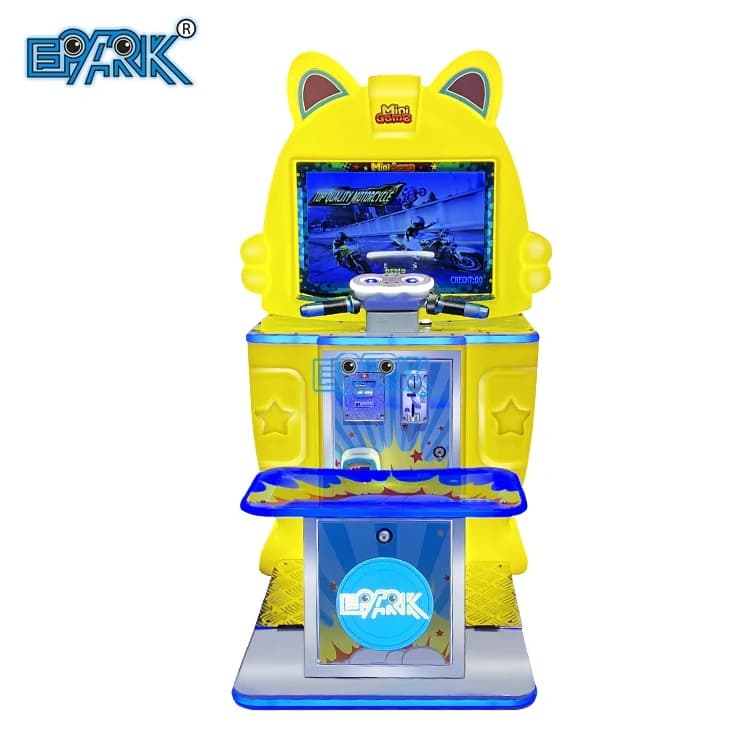
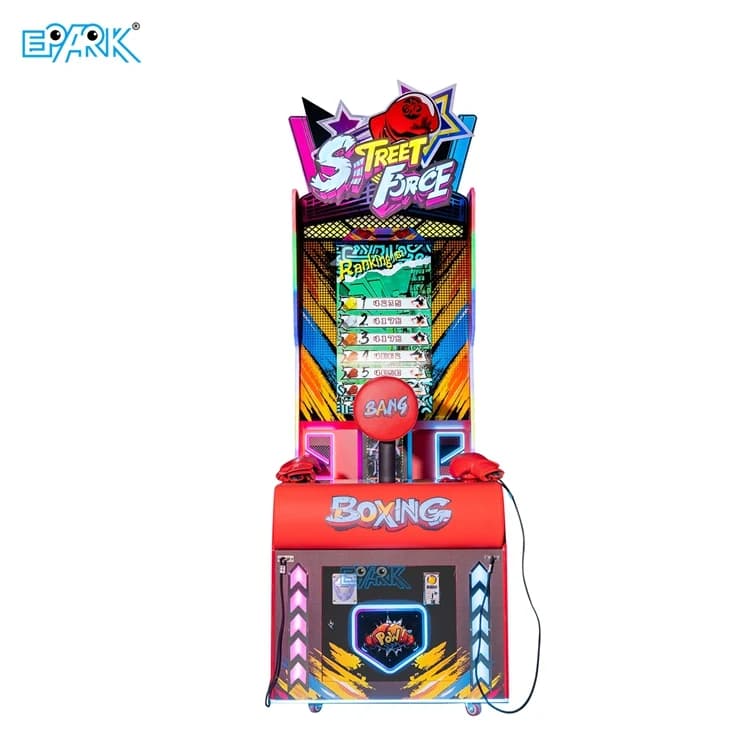
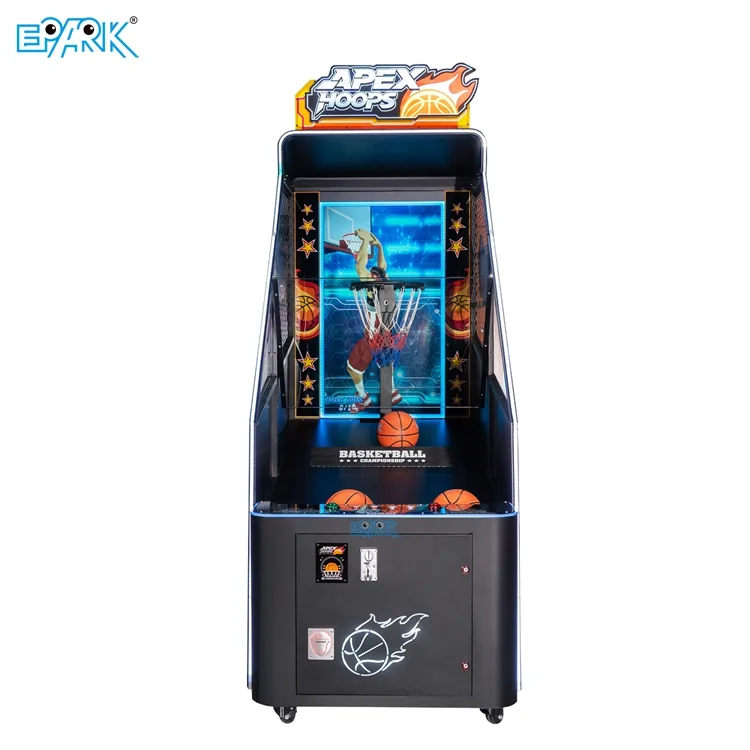
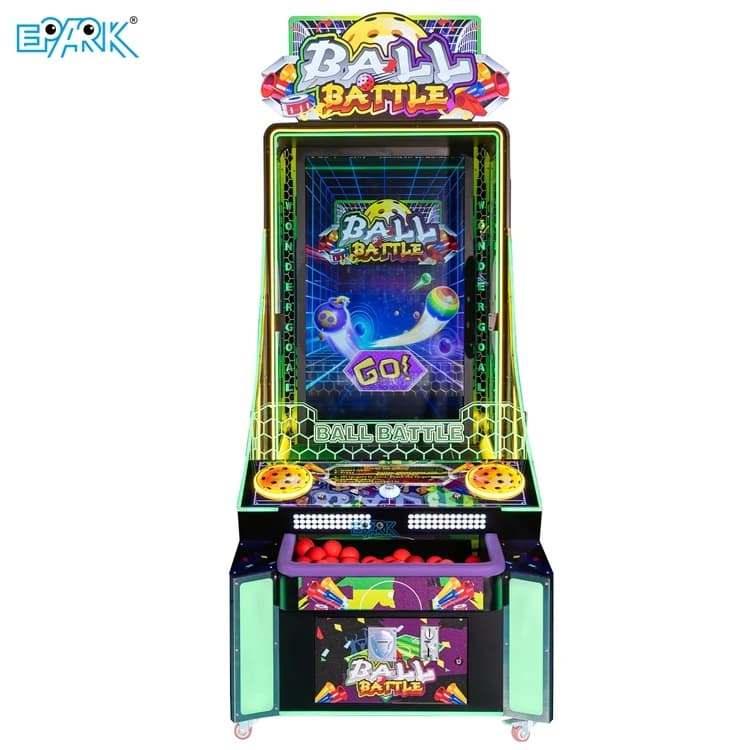
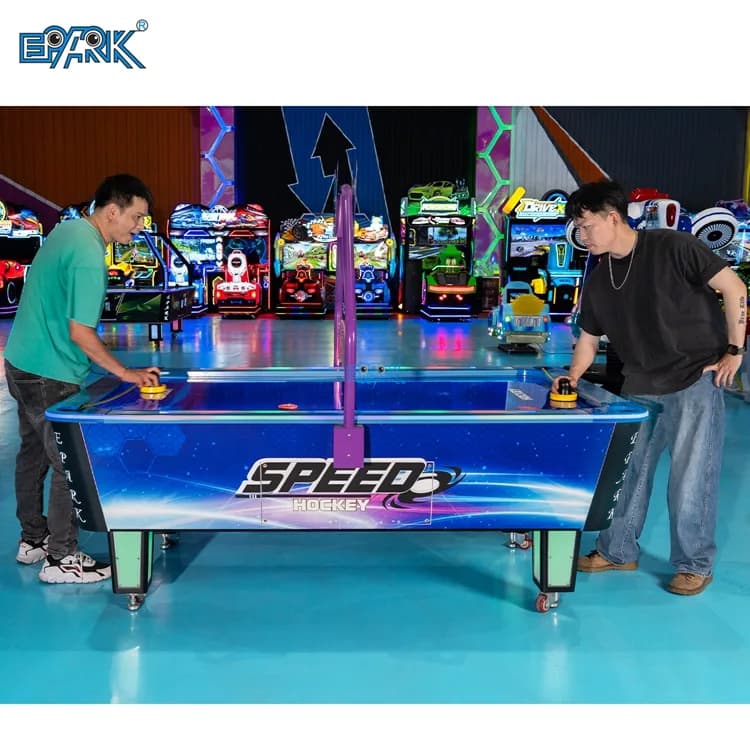
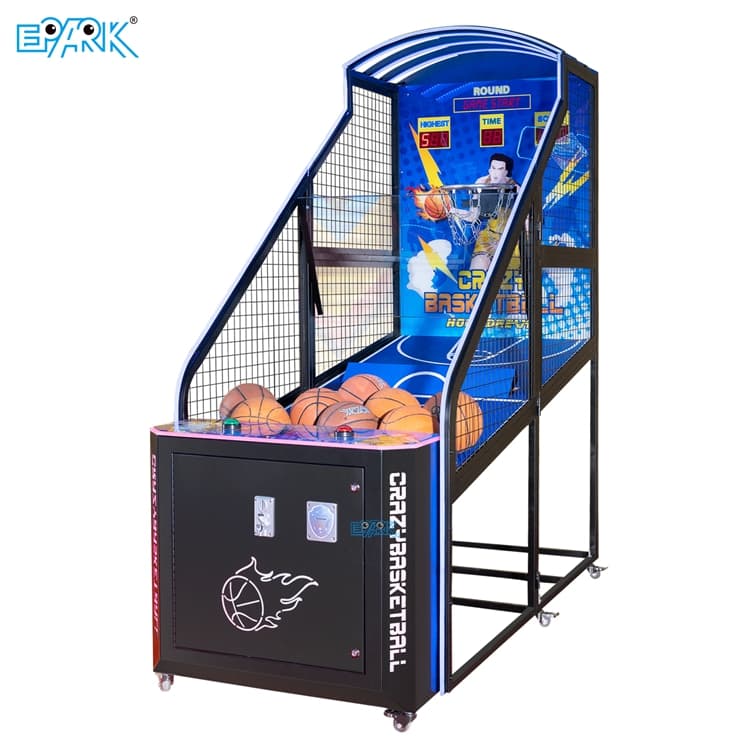
Common commercial arcade equipment includes racing machines, shooting games, basketball and sports games, claw machines, redemption games, air hockey tables, VR machines, kiddie rides, and interactive attractions.
Each category can serve a different customer need. Racing machines can create competitive multiplayer experiences, while claw machines provide prize-based entertainment. Redemption games can encourage repeat play through ticket collection, and VR equipment can add more immersive experiences to the venue.
The right combination depends on the target audience and available space. A 200-square-meter venue cannot use the same equipment mix as a 1,000-square-meter FEC. Operators should therefore consider equipment size, player capacity, expected usage, and revenue potential together.
It is also important to avoid filling the venue with too many similar machines. For example, having a large number of machines that serve the same customer group may limit the overall appeal of the venue.
A balanced equipment mix can provide different experiences for families, children, teenagers, and adults. This gives visitors more opportunities to find games they enjoy and can encourage longer visits.
3. Compare Technical Specifications Carefully
Once the equipment categories have been selected, buyers should compare technical specifications rather than relying only on product appearance.
Important specifications may include machine dimensions, power consumption, screen size, player capacity, game quantity, machine weight, installation requirements, and operating voltage.
Dimensions are particularly important for international projects. A large arcade machine may fit comfortably inside the planned venue but still create problems during delivery if it cannot pass through the building entrance, elevator, corridor, or service door.
Buyers should therefore confirm the packed dimensions as well as the finished machine dimensions. Packed size can also affect container loading and international shipping costs.
Power requirements should also be checked before ordering. Different machines may use different voltage specifications, and some larger attractions may require higher power capacity. Confirm the required voltage, frequency, plug type, rated power, and installation requirements with the supplier.
Screen specifications can also affect customer experience. Racing simulators, shooting games, basketball machines, and other large attractions may use different screen sizes and display configurations. Buyers should compare these specifications based on the intended venue and customer experience.
For machines with mechanical movement, buyers should also understand the operating space required around the equipment. This is important for customer safety, maintenance access, and efficient floor planning.
4. Review Payment Systems and Operating Configuration
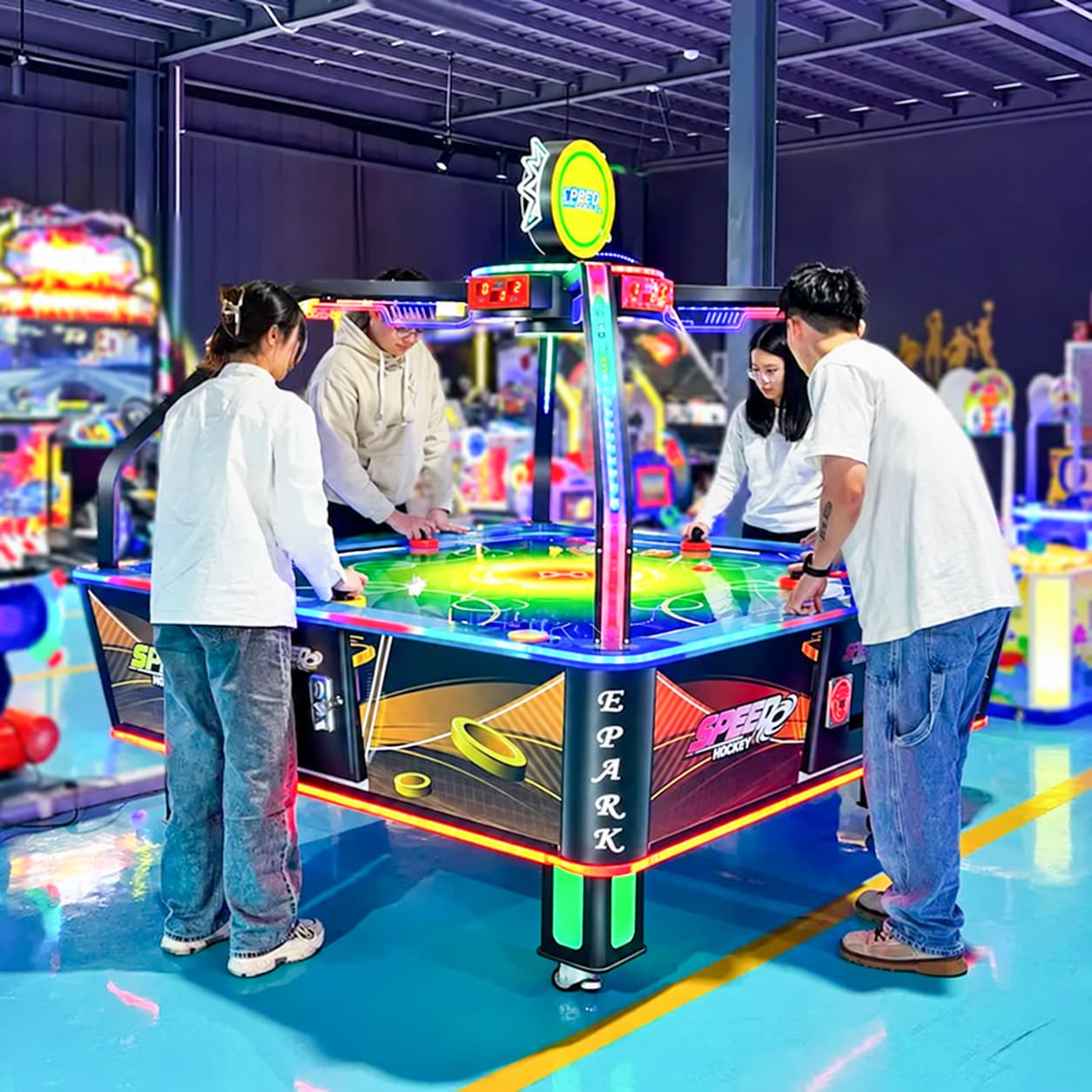
Payment systems are another important consideration when buying arcade machines.
Depending on the market, machines may operate with coins, tokens, card systems, cashless payment solutions, or other payment methods. Buyers should confirm which payment systems are supported before production begins.
For a small arcade, individual coin mechanisms may be sufficient. Larger FEC projects may prefer centralized card systems or cashless payment solutions that allow customers to use one payment method across multiple machines.
The payment configuration should match the operating model of the venue. Buyers should ask whether payment systems can be customized and whether local currency or specific card systems are supported.
It is also important to confirm how payment settings can be adjusted after installation. For example, operators may want to change the price per play, game duration, or payment mode as customer behavior changes.
Discussing these requirements before production helps avoid additional modification costs later.
5. Check Customization Options Before Ordering
Customization is especially important for distributors, branded entertainment venues, and large FEC projects.
Depending on the manufacturer, buyers may be able to customize cabinet colors, logos, artwork, languages, payment systems, voltage and plug standards, and selected configurations.
For distributors, customized branding can help create a stronger identity in the local market. For arcade operators, custom cabinet artwork can help machines match the overall theme of the venue.
However, buyers should understand exactly what customization is included in the quoted price. Some changes may be standard options, while others may require additional engineering or production costs.
Production time should also be considered. Customized equipment may require additional artwork approval, engineering preparation, sample confirmation, or production time.
Before production begins, buyers should approve the final specifications and artwork in writing. This creates a clear reference for both the buyer and manufacturer and reduces the risk of misunderstandings.
6. Compare the Total Arcade Machine Cost
Price is naturally an important part of buying arcade machines, but the machine quotation is only one part of the total investment.
International buyers should consider the machine price together with customization, packaging, shipping, insurance where applicable, import-related costs, installation, spare parts, and ongoing maintenance.
A machine with a lower purchase price may not necessarily have a lower total operating cost. If replacement parts are difficult to obtain or technical support is limited, future maintenance may become more complicated.
Buyers should therefore compare the overall value of different offers instead of comparing only the first number on a quotation.
For large orders, request a detailed quotation that clearly separates equipment prices, customization costs, packaging, and other applicable charges. This makes it easier to compare suppliers using the same purchasing criteria.
The expected service life and operating frequency should also be considered. Commercial arcade machines are often used for many hours every day, so durability and maintenance requirements can have a significant impact on long-term operating costs.
7. Confirm Production Lead Time and Delivery Schedule
Production lead time is especially important when arcade machines are being purchased for a new entertainment venue.
A delayed shipment can affect installation, staff training, marketing plans, and the planned opening date.
Before placing an order, buyers should confirm the expected production schedule and understand whether customization will affect the lead time.
The complete schedule may include material preparation, cabinet production, assembly, software configuration, testing, final inspection, packing, and shipping preparation.
For larger FEC projects, production should be coordinated with the construction schedule. Equipment should ideally arrive when the venue is ready for installation rather than too early or too late.
International shipping also requires additional planning. Buyers should allow time for transportation, customs clearance, and local delivery.
Having a clear timeline from the beginning helps project owners coordinate different suppliers and contractors more efficiently.
8. Check Quality Inspection Before Shipment
Quality inspection should be an important part of the purchasing process.
Before shipment, buyers can request product photos, testing videos, detailed specifications, inspection information, and final machine confirmation.
The inspection should cover both appearance and function. Screens, controls, sound, lighting, payment systems, game functions, mechanical movement, and safety-related components should all be checked according to the machine type.
For a large order, buyers may also arrange a factory visit or third-party inspection when appropriate.
Pre-shipment inspection is especially useful for international buyers because it provides an opportunity to identify problems before the machines leave the factory.
A good supplier should also be able to communicate clearly about any issues discovered during testing and explain how they will be resolved before shipment.
For customized machines, inspection should also confirm that the final products match the approved artwork, branding, configuration, and technical specifications.
9. Review Packaging, Shipping, Spare Parts, and Warranty
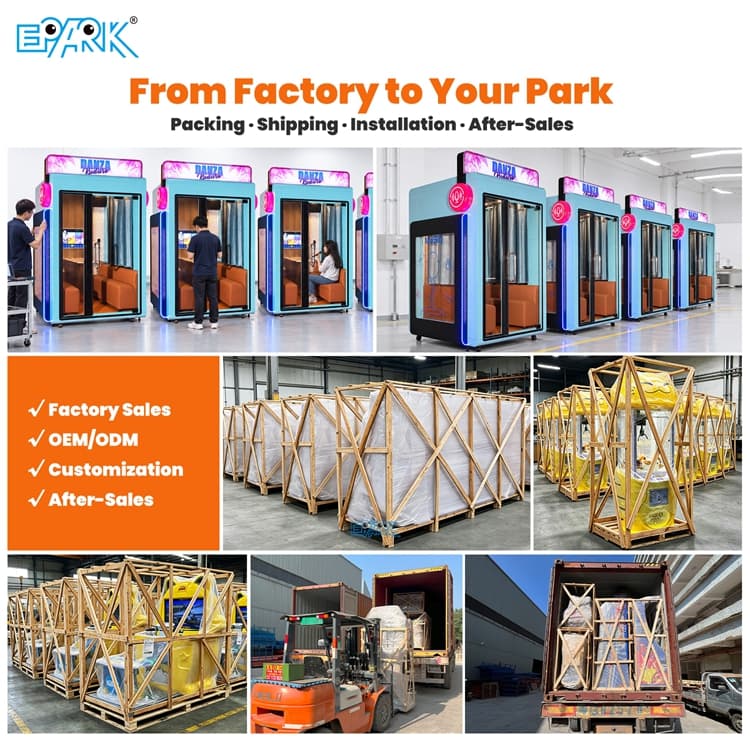
Commercial arcade machines can contain large screens, electronic components, acrylic panels, metal structures, moving mechanisms, and decorative parts. Proper packaging is therefore essential for international transportation.
Ask the supplier how machines will be protected during shipping and whether wooden frames, reinforced cartons, protective materials, or other packaging methods are required.
Packed dimensions and weight should also be confirmed before shipment. This information helps importers plan container loading, warehouse space, local transportation, and installation.
Spare parts should be discussed before the order is completed. Even reliable commercial machines may eventually require replacement components because of normal wear and continuous use.
Depending on the machine, common replacement parts may include buttons, microswitches, cables, power supplies, sensors, fans, lighting components, payment-system parts, and mechanical components.
Warranty terms should also be reviewed carefully. Buyers should understand the warranty period, what is covered, how technical problems are reported, and how replacement parts are supplied.
For international customers, remote troubleshooting and technical communication are particularly important. A supplier that can provide manuals, maintenance guidance, troubleshooting videos, and spare-parts support can make long-term operation easier.
10. Evaluate the Supplier Before Placing the Order
Before making a final purchasing decision, buyers should look beyond the product catalog.
Ask the supplier for detailed specifications, factory information, product videos, testing information, customization examples, packaging details, and export experience.
If possible, a factory visit or live factory video tour can provide additional information about the supplier's production environment.
For large FEC projects, it is also useful to evaluate whether the supplier can support more than individual machine sales. Equipment selection, layout planning, production coordination, shipping assistance, installation guidance, and after-sales service can all become important as the project becomes larger.
A supplier that understands the entire project can often communicate more effectively with buyers and provide more coordinated support.
The final decision should consider product quality, total cost, production capability, service, and long-term operating value rather than price alone.
How EPARK Supports Arcade Equipment Buyers
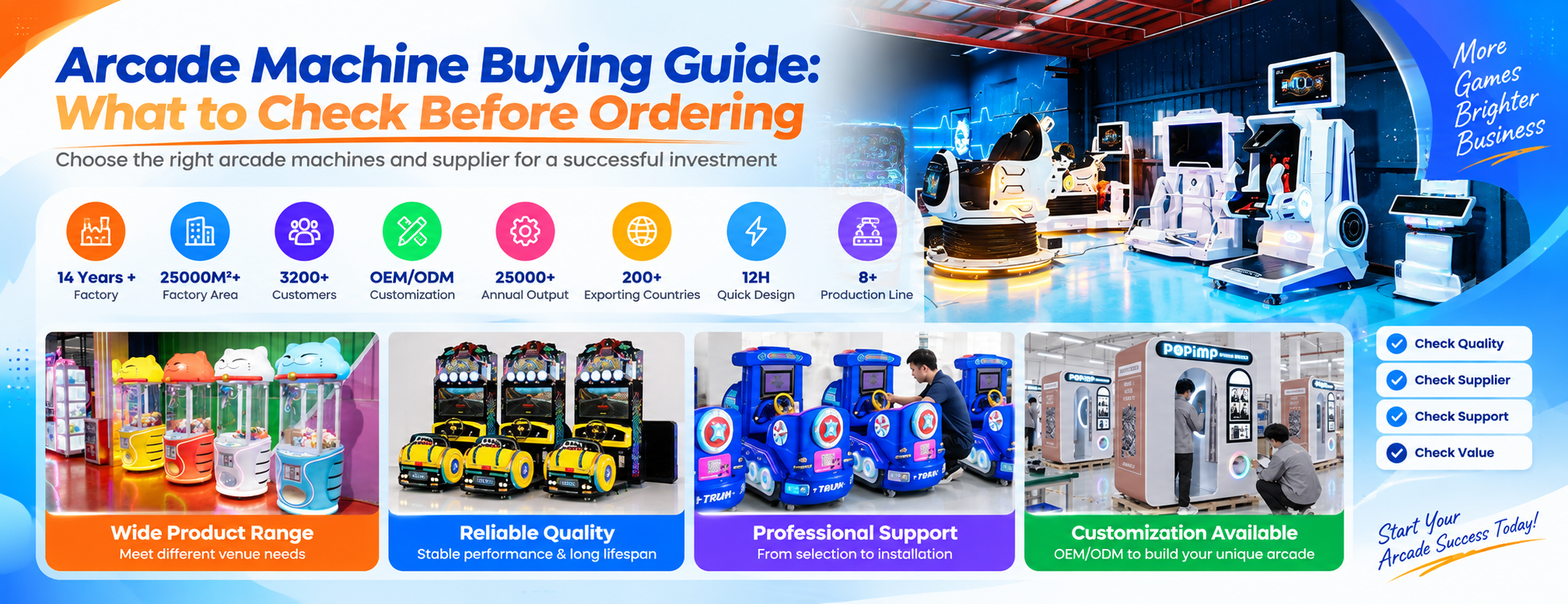
EPARK is a professional arcade machine manufacturer based in Guangzhou, China, with more than 14 years of industry experience.
The company provides commercial entertainment equipment for FEC operators, arcade owners, distributors, importers, wholesalers, and entertainment investors in global markets.
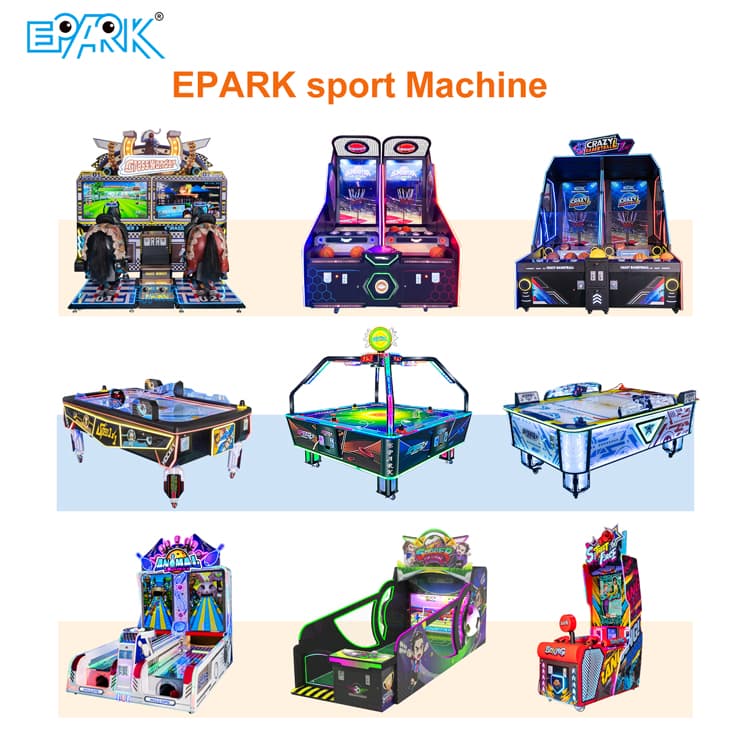
EPARK's product range includes arcade game machines, claw machines, redemption games, racing machines, shooting games, sports arcade machines, VR equipment, kiddie rides, and complete FEC solutions.
For project customers, support can include equipment selection, customization, layout planning, production, quality inspection, packing, shipping, installation guidance, spare-parts support, and after-sales assistance.
This one-stop approach allows buyers to manage equipment purchasing from the initial planning stage through production, delivery, installation, and operation.
FAQ
What should I check before buying arcade machines?+
Buyers should check machine specifications, dimensions, power requirements, payment systems, customization options, production lead time, quality inspection, packaging, shipping, warranty, spare parts, and after-sales support. The supplier's production capability and experience with international projects should also be considered.
How much does it cost to buy commercial arcade machines?+
The total cost depends on machine type, quantity, customization, packaging, shipping, and project requirements. Buyers should compare the complete project cost rather than only the machine unit price and should confirm whether additional installation or customization costs apply.
Should I buy different arcade machines from one supplier?+
For complete FEC projects, working with one experienced supplier can simplify equipment selection, communication, production coordination, shipping, and after-sales support. However, buyers should still evaluate product quality, technical specifications, pricing, and project suitability before ordering.
Conclusion
Buying commercial arcade machines requires careful planning and comparison.
Before placing an order, buyers should evaluate equipment categories, technical specifications, payment systems, customization, total costs, production schedules, quality inspection, packaging, shipping, spare parts, warranty, and after-sales support.
The purchasing process should focus on long-term business requirements rather than price alone. A suitable supplier can provide not only commercial arcade machines but also the technical knowledge, project support, and service needed to operate them successfully.
For FEC operators, distributors, and entertainment investors, taking time to evaluate the complete purchasing process can reduce unexpected costs and create a stronger foundation for a successful arcade business.