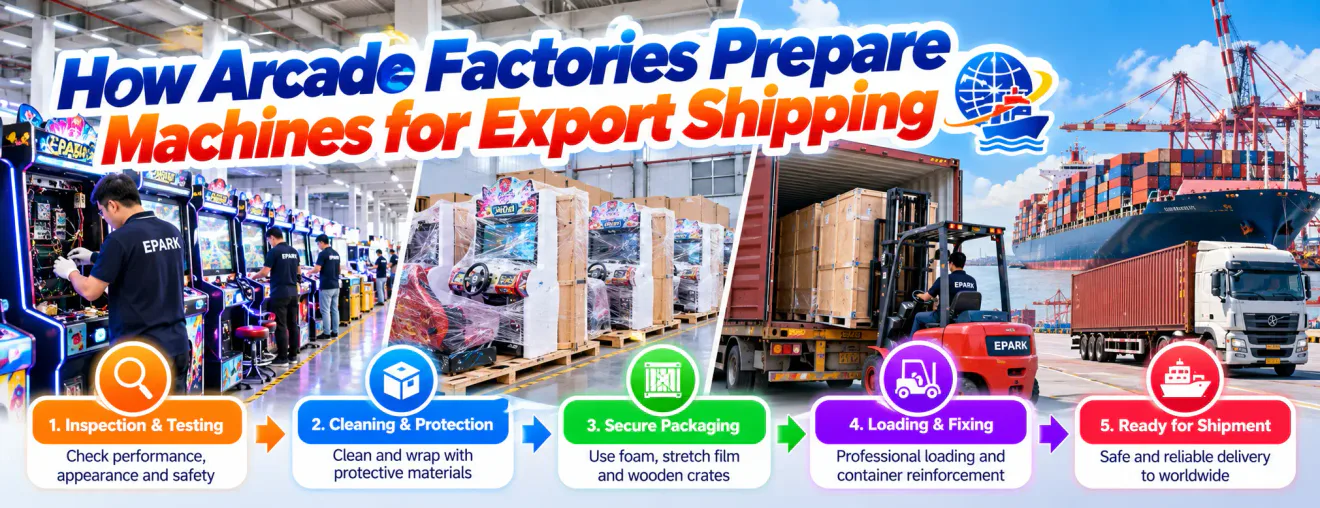
How Arcade Factories Prepare Machines for Export Shipping
Explore how arcade machine factories prepare commercial gaming equipment for export, from cabinet protection and accessory checks to container loading and shipping documents.
Introduction
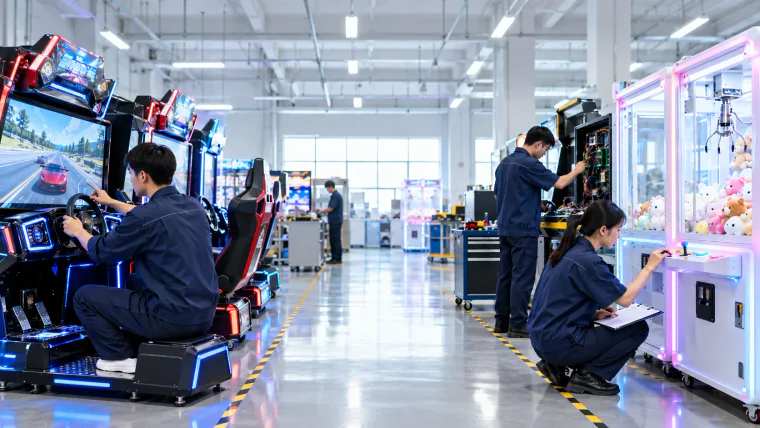
Exporting commercial arcade machines requires careful preparation because gaming equipment often contains large cabinets, electronic displays, mechanical components, and decorative surfaces. Packaging and shipment arrangements should reflect the design of each machine.
For overseas distributors, importers, and family entertainment center investors, understanding factory export preparation helps clarify purchasing requirements, logistics responsibilities, and delivery expectations before an order is shipped.
Why Export Preparation Matters
Protect Equipment During Transportation
International shipments may involve multiple handling stages, including factory loading, port operations, ocean transportation, customs procedures, and local delivery. Suitable packaging helps reduce the risk of damage to vulnerable equipment surfaces and components.
Support Efficient Import Operations
Accurate package dimensions, weights, labels, and shipping records help buyers coordinate freight quotations and receiving arrangements. Missing or inconsistent information may cause avoidable questions during shipment preparation.
Improve Delivery Coordination
Factories, freight forwarders, and buyers need consistent information about equipment quantities, packing methods, and shipment schedules. Clear communication helps each party understand its responsibilities under the agreed terms.
Confirm Equipment Details Before Packing
Review the Final Order Configuration
Before packing begins, the factory should compare the finished machines with the confirmed purchase agreement. Relevant information may include model names, quantities, player capacity, screen arrangements, and approved customization requirements.
Identify Special Handling Requirements
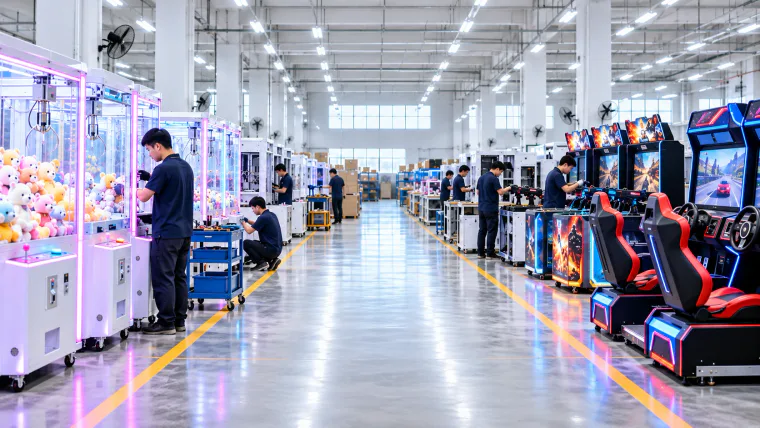
Large racing simulators, VR attractions, claw machines, and children's rides may require different handling arrangements. The factory should consider cabinet dimensions, delicate components, moving mechanisms, and manufacturer-specific transportation instructions.
Check Customized Equipment
Custom logos, cabinet artwork, payment configurations, and other approved modifications should be verified against the order records. This helps reduce the risk of shipping machines with incorrect branding or configuration details.
Prepare Arcade Cabinets for Packing
Inspect Exterior Cabinet Conditions
Before applying protective materials, staff should examine cabinet panels, decorative surfaces, access doors, and visible components. Identifying existing damage at this stage helps distinguish production issues from possible transportation damage.
Secure Accessible Moving Components
Some machines contain moving seats, controls, mechanical assemblies, or other components that require transportation protection. Any securing procedure should follow the manufacturer's instructions to avoid damaging the equipment.
Protect Screens and Control Areas
Displays, touchscreens, buttons, steering wheels, and other player interfaces may require additional protection. Packing materials should be selected to suit the component without placing inappropriate pressure on delicate surfaces.
Choose Suitable Export Packaging
Consider Cabinet Size and Construction
Packaging requirements vary according to the machine's dimensions, weight, shape, and construction. A compact claw machine may require a different arrangement from a large multiplayer racing cabinet.
Use Appropriate Protective Materials
Protective films, cushioning materials, corner protection, and suitable outer packaging may be used according to the equipment and shipment conditions. The objective is to limit avoidable movement, abrasion, and impact during handling.
Review Wood Packaging Requirements
When wooden pallets or crates are used, applicable destination requirements should be checked. Certain international shipments require compliant wood packaging treatment and marking under relevant phytosanitary rules.
Manage Equipment Disassembly
Determine Whether Disassembly Is Necessary
Some large arcade machines may be transported in separate sections to improve handling or accommodate access restrictions. Disassembly should only be performed where supported by the machine design and manufacturer instructions.
Identify Separate Components
Screens, decorative structures, control assemblies, and other removable parts should be identified according to the approved packing arrangement. Clear labels help installation personnel understand which components belong together.
Prepare Reassembly Information
When equipment is shipped in sections, the buyer should confirm what installation instructions and technical assistance are available. Specialized mechanical and electrical work should be performed by appropriately qualified personnel.
Check Accessories Before Shipment
Verify Included Items
Depending on the model, an arcade machine shipment may include keys, cables, approved spare parts, manuals, or separate installation components. The factory should compare these items with the confirmed order and packing records.
Keep Accessories Organized
Small components can be difficult to identify when multiple machines are shipped together. Organized accessory packaging and clear identification help buyers avoid mixing parts from different models.
Confirm Optional Equipment
Payment devices, customized controls, and other optional items should be checked against the purchase agreement. Buyers should not assume that every accessory shown in promotional materials is included in the standard configuration.
Prepare Packing Lists and Shipping Records
Record Package Dimensions and Weights
Packing records should identify the number of packages and their relevant dimensions and weights. These details support freight planning, cargo handling, and the buyer's receiving arrangements.
Match Documents With Actual Cargo
The commercial invoice, packing list, and other relevant shipping documents should reflect the agreed transaction and actual shipment. Consistent product descriptions and quantities help reduce avoidable documentation discrepancies.
Plan Container Loading
Confirm Destination Requirements
Import documentation requirements vary by country and product classification. Buyers should consult their freight forwarder or customs broker regarding applicable certificates, declarations, and local import procedures.
Review Cargo Dimensions
Before loading, the factory and logistics provider should consider package dimensions, weights, handling requirements, and available container space. Large arcade cabinets may limit how cargo can be positioned.
Protect Cargo Against Movement
Suitable cargo securing methods help limit movement during transportation. Loading arrangements should follow relevant transport safety requirements and account for the weight and characteristics of the equipment.
Coordinate Loading Activities
Loading should be carried out using suitable equipment and trained personnel. Clear loading records and photographs, where agreed, can provide useful references for the buyer and logistics provider.
Coordinate International Shipping
Confirm the Agreed Trade Terms
The purchase agreement should identify the applicable Incoterm and named location where relevant. These terms help define transportation responsibilities, costs, and risk allocation between buyer and seller.
Review Shipment Scheduling
Production completion, packing, container availability, vessel schedules, and documentation processing can affect shipment timing. Buyers should confirm the latest estimated schedule rather than treating an early estimate as guaranteed.
Prepare the Buyer for Delivery
How EPARK Supports Export Equipment Orders
Importers should arrange customs clearance, inland transportation, unloading equipment, and suitable storage or installation space. Early preparation is particularly important for large cabinets and mixed equipment orders.
Discuss Equipment and Packing Needs
EPARK is a Guangzhou-based commercial arcade equipment manufacturer supplying machines for overseas distributors, operators, and entertainment projects. Buyers can discuss model selection, equipment dimensions, and order requirements before confirming their purchase.
Coordinate Order Information
For bulk or customized equipment orders, EPARK can discuss approved configurations, packing details, and shipment preparation requirements according to the agreed order scope. Written confirmation helps both parties coordinate the purchasing process.
Prepare for International Delivery
EPARK exports commercial entertainment equipment to international markets. Buyers should confirm current packing methods, shipping arrangements, and documentation requirements for their specific order and destination.
Frequently Asked Questions
How Are Arcade Machines Protected During Export?+
Protection depends on cabinet size, construction, sensitive components, and transportation arrangements. Buyers should confirm the packaging method proposed for each selected model.
Can Large Arcade Machines Be Shipped in Separate Parts?+
Some models support shipment in sections, but this depends on the equipment design. Buyers should confirm disassembly arrangements and reassembly requirements before ordering.
What Information Is Needed for a Freight Quotation?+
Freight providers commonly require the shipping origin and destination, number of packages, dimensions, gross weights, cargo description, and intended transportation method.
Should Buyers Request Packing Photos?+
Packing photographs may help buyers review the prepared shipment when this service is agreed with the supplier. They supplement, rather than replace, appropriate packing records and delivery inspections.
Conclusion
Preparing arcade machines for export involves more than placing equipment inside a shipping container. Cabinet protection, accessory verification, accurate documentation, and coordinated loading all contribute to organized international delivery.
For distributors and entertainment project investors, confirming export preparation requirements before shipment helps reduce uncertainty and supports smoother equipment receiving and installation.