How Arcade Machine Factories Manage Component Sourcing
Discover how arcade machine factories manage component sourcing, compatibility, inventory planning, and production continuity for commercial equipment.
Introduction
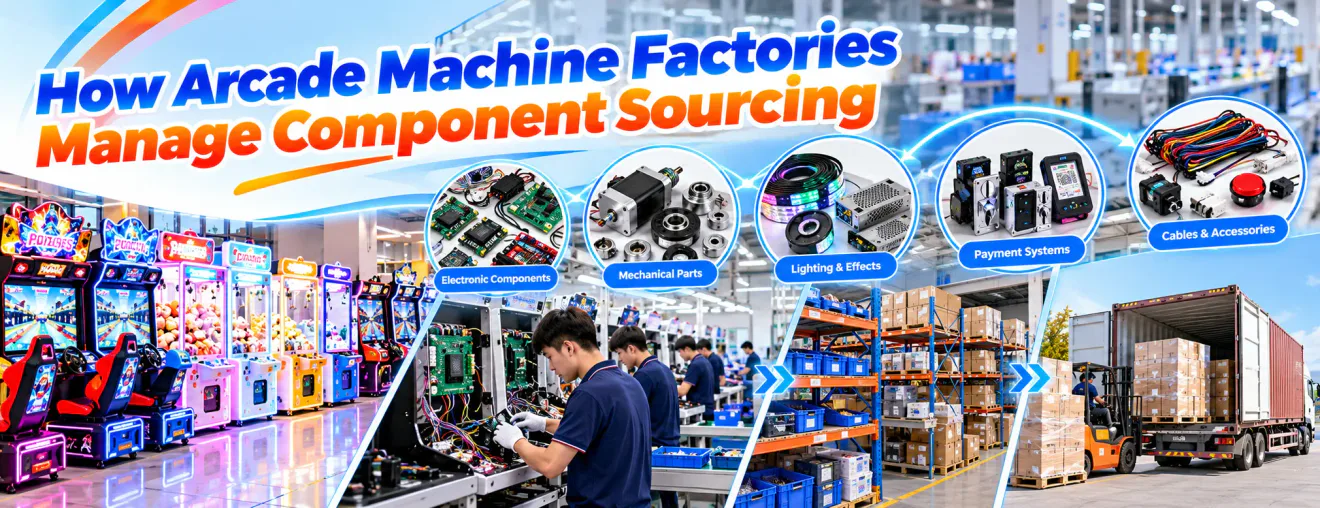
Behind every commercial arcade machine is a network of components that must work together reliably. Screens, controls, game systems, wiring, power supplies, sensors, mechanical parts, and other components all contribute to the final equipment.
For an arcade machine factory, sourcing these components is an important part of manufacturing capability. The challenge is not simply finding a component at the lowest price, but finding components that match the required specifications and remain available throughout production.
This becomes more important when a manufacturer produces multiple machine categories or handles repeated orders for distributors and FEC operators. Different products can require different combinations of electronic, mechanical, and interactive components.
Understanding component sourcing can help buyers better understand how a professional arcade machine factory maintains product consistency, manages production requirements, and supports long-term equipment supply.
Why Component Sourcing Matters in Arcade Manufacturing
Component sourcing has a direct connection with the reliability and consistency of commercial arcade equipment. A machine may have an attractive cabinet design, but its long-term operation also depends on the components installed inside it.
Commercial arcade machines are used frequently in busy entertainment venues, so manufacturers need to consider how components will perform under repeated use and within the conditions of a commercial environment.
The sourcing process therefore needs to consider compatibility, availability, technical requirements, consistency, and the intended operating conditions of the finished machine.
A component that works well in a demonstration machine may not necessarily be the best choice for equipment that will operate for many hours every day.
For this reason, an experienced arcade machine factory usually evaluates components as part of the complete machine rather than treating every part as an independent purchase.
Good sourcing also creates greater consistency between production batches. When the factory has reliable component sources, it becomes easier to reproduce the same machine configuration across multiple orders.
Matching Components to Different Arcade Machine Types
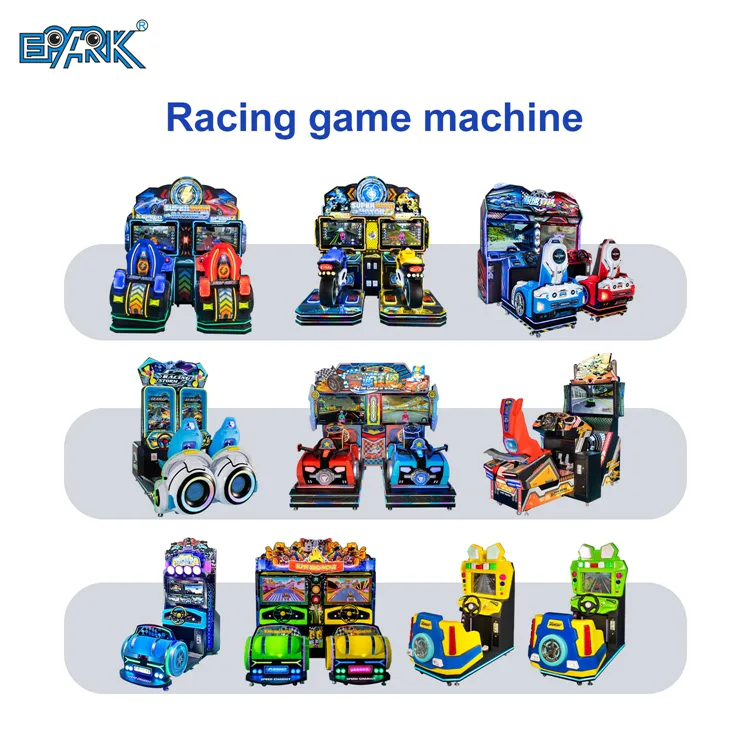
Different arcade machines require different combinations of hardware. A racing machine, claw machine, redemption game, sports game, and VR attraction may have completely different internal systems.
Racing machines can require displays, steering systems, pedals, seats, speakers, game systems, and other interactive components. Their component selection needs to support the specific way players interact with the machine.
Claw machines require different mechanical and electronic elements because the player interacts with a prize mechanism rather than a conventional game controller.
Redemption machines may require additional systems for ticket handling and game interaction, while VR equipment can involve headsets, sensors, computers, and other specialized hardware.
Because each product category has different requirements, component sourcing needs to begin with the machine's intended function and customer experience.
A professional factory does not simply purchase the same type of component for every product. It considers how each component fits into the complete equipment design.
How Factories Evaluate Component Suppliers
Supplier selection is an important part of component sourcing. A factory may work with different suppliers for electronic components, mechanical parts, displays, cabinets, controls, and other materials.
The supplier's ability to provide consistent products is important because manufacturing schedules can be affected if components become unavailable or specifications change unexpectedly.
Factories may consider product consistency, technical communication, delivery capability, quality history, and the supplier's ability to support ongoing production requirements.
Price is also relevant, but it is only one part of the decision. A very low component price may create problems if the component does not provide consistent performance or becomes difficult to obtain later.
Stable supplier relationships can make production planning easier because the manufacturer has a clearer understanding of component availability and expected delivery conditions.
For long-term commercial equipment production, reliable sourcing can be more valuable than constantly changing suppliers based only on short-term price differences.
Balancing Component Cost and Long-Term Value
Component cost naturally affects the final price of an arcade machine, but manufacturers need to balance cost with commercial requirements.
Choosing every component based only on the lowest price can create difficulties if the component has limited availability, inconsistent specifications, or does not perform well under repeated use.
At the same time, selecting the most expensive component for every application may make the final machine unnecessarily expensive.
The practical goal is to choose components that provide an appropriate balance between performance, reliability, availability, and cost.
The required balance can also vary by machine category. A simple component may be sufficient for one application while a more specialized component may be necessary for another.
Manufacturers need to understand the role of each component before making a sourcing decision and consider how that component affects the complete machine.
Managing Component Compatibility
Compatibility is another major consideration when sourcing arcade machine components. A screen, game system, control panel, sensor, power supply, or mechanical component cannot always be replaced with another part simply because it appears similar.
Electrical characteristics, physical dimensions, communication methods, mounting structures, and software requirements may all affect compatibility.
When a manufacturer changes one component, other parts of the machine may also need to be reviewed. A seemingly small change can sometimes affect assembly or system performance.
This is particularly important for customized equipment because a change requested by a customer may affect several connected systems.
A professional factory therefore needs clear technical information about the components used in each product configuration.
Good compatibility management reduces the risk of unexpected technical problems during assembly and helps maintain consistency between different production batches.
Inventory Planning for Continuous Production
A factory cannot manufacture machines efficiently if important components are constantly unavailable. Inventory planning helps manufacturers coordinate component quantities with production schedules and expected orders.
The required inventory level can depend on order volume, supplier lead time, component availability, production frequency, and the importance of the component to the finished machine.
Standard components that are used across several machine categories may require different inventory planning from specialized components used only in one product.
Large orders also require additional coordination because component demand increases significantly during production.
Factories need to understand upcoming production requirements early enough to prepare the necessary materials and reduce the risk of interruptions.
Good inventory planning can reduce production delays and help manufacturing teams maintain a more predictable schedule.
It also gives the factory more time to respond if a supplier reports a delay or a component becomes temporarily difficult to obtain.
Handling Component Changes and Substitutions
Component availability can change over time. A supplier may discontinue a product, modify its specifications, experience a supply interruption, or introduce a replacement version.
When this happens, the factory should not automatically substitute the new component without checking compatibility and performance.
The replacement may have different dimensions, electrical characteristics, connectors, performance levels, or software requirements.
For existing customers, component changes can also affect future spare-parts requirements. Maintaining clear information about original and replacement components can make long-term support easier.
Technical teams may need to evaluate the proposed alternative before it is used in production.
A structured substitution process allows the factory to respond to supply changes while protecting the intended machine configuration and customer requirements.
Why Component Records Matter for Commercial Equipment
Documentation is an important part of component management. Factories need to know which components belong to different machine models and configurations.
This information allows purchasing, production, testing, engineering, and technical teams to communicate more accurately.
Component information may include specifications, supplier information, compatible alternatives, and the machine configurations in which a component is used.
This information becomes especially valuable when a customer places a repeat order after a period of time.
Without clear records, a factory may need to investigate the original configuration again before producing additional machines.
Good component documentation can also support after-sales communication because technical teams can more easily identify the relevant part when a customer reports an issue.
For distributors, consistent component information can make repeat orders and future product planning easier to coordinate.
How Component Sourcing Affects Arcade Machine Buyers
Buyers may not see component sourcing directly, but it can influence the equipment they receive. Stable component supply helps manufacturers maintain consistent configurations across repeated orders.
This can be important for distributors that need to sell similar machines to multiple customers and for FEC operators that want consistent equipment across several locations.
Component availability can also influence production schedules. If a specialized component requires a longer lead time, it may affect the timing of a customized order.
For this reason, buyers should discuss important product requirements with the manufacturer before confirming large or customized orders.
If a project requires a specific display, payment system, controller, sensor, or other component, the requirement should be communicated early.
Early communication gives the factory more time to evaluate sourcing and production implications.
This creates a more predictable purchasing process and helps reduce avoidable changes later in the project.
How EPARK Manages Arcade Equipment Supply
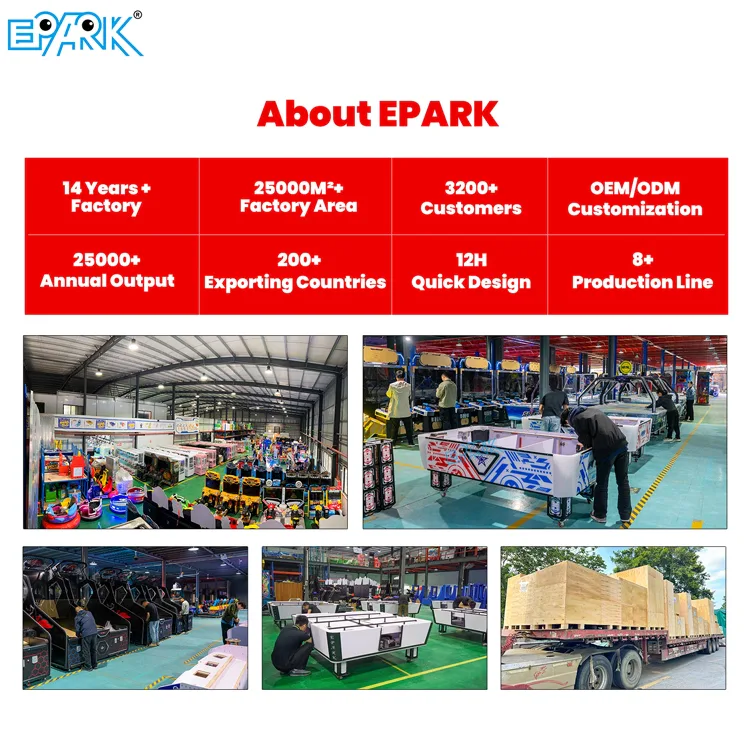
EPARK is a professional arcade machine manufacturer based in Guangzhou, China, serving FEC operators, arcade owners, distributors, importers, wholesalers, and entertainment investors.
EPARK provides commercial arcade machines, racing games, shooting games, claw machines, redemption games, sports arcade equipment, VR equipment, kiddie rides, and complete entertainment solutions.
For different equipment categories, component requirements are considered according to the machine's intended function and project configuration.
For customer projects, product requirements can be reviewed before production so that the appropriate machine configuration can be confirmed.
EPARK also supports project customers with equipment selection, customization, production, testing, packing, shipping, installation guidance, spare-parts support, and after-sales service.
This allows component requirements to remain connected with the complete equipment solution rather than being treated as an isolated purchasing issue.
FAQ
Why is component sourcing important for arcade machines?+
Component sourcing affects machine consistency, compatibility, availability, and long-term production. Reliable components help manufacturers produce commercial equipment that matches the intended configuration and operating requirements. A stable sourcing system can also help reduce production interruptions and make it easier for manufacturers to maintain consistent equipment across different orders.
Can an arcade machine factory change components for a custom project?+
Depending on the machine and project requirements, a factory may be able to use alternative or customized components. Compatibility and technical requirements should be reviewed before production. This is especially important when a component connects with software, electrical systems, mechanical structures, or other parts of the machine. Changes should be evaluated as part of the complete system.
How do factories handle discontinued arcade machine components?+
Factories can evaluate suitable replacement components based on specifications, compatibility, availability, and the original machine configuration. A replacement should be checked before being introduced into production. Maintaining component records can also make it easier to support existing equipment when original parts are no longer available.
Conclusion
Component sourcing is an important but often overlooked part of arcade machine manufacturing.
A professional factory needs to coordinate suppliers, technical specifications, compatibility, inventory, substitutions, and documentation while maintaining the requirements of the finished machine.
For commercial buyers, stable component management can support more consistent equipment, smoother production, and better long-term supply.
When evaluating an arcade machine factory, buyers should therefore look beyond the showroom and finished cabinet. The manufacturing systems behind the product can be just as important to the long-term value of the equipment.