Arcade Machine Maintenance Schedule for Busy Venues
Learn how to create an arcade machine maintenance schedule with daily, weekly, and monthly checks to improve equipment reliability and venue operations.
Introduction
Running a busy arcade or family entertainment center requires more than selecting popular games. Machines need regular attention to maintain a consistent player experience and avoid unnecessary interruptions.
A practical maintenance schedule gives staff clear responsibilities and helps operators identify problems before they become more disruptive. The right frequency depends on machine type, usage, and manufacturer instructions.
Why Maintenance Scheduling Matters
Protecting the Player Experience
Players expect buttons, screens, controls, and payment systems to respond correctly. Even a small fault can interrupt a game and discourage repeat visits.
Routine checks help staff notice issues early and arrange repairs before more visitors are affected.
Reducing Unplanned Downtime
An out-of-service machine occupies floor space without delivering its intended entertainment experience. Repeated failures can also increase staff workload.
A documented maintenance schedule supports preventive care and more organized repairs, although it cannot eliminate every breakdown.
Making Staff Responsibilities Clear
Without assigned tasks, inspections may be inconsistent or overlooked during busy periods.
A shared checklist clarifies what needs checking, who performs it, and when an issue should be escalated.
Build a Machine Inventory First
Record Each Machine
Create a register containing the model, serial number, location, installation date, and supplier contact information.
Include the equipment category and information needed to locate the correct manual or replacement parts.
Identify Different Maintenance Needs
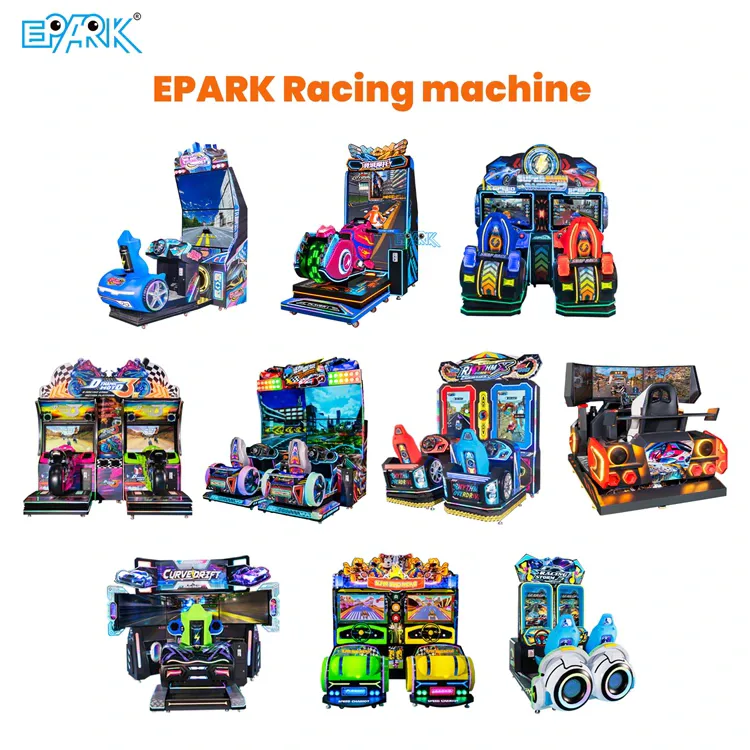
Claw machines, racing games, redemption equipment, and children's rides use different operating mechanisms.
Maintenance tasks should reflect the actual model rather than applying the same checklist to every machine.
Keep Manuals Accessible
Manufacturer instructions should guide cleaning, inspection, adjustment, and servicing.
Store digital copies where authorized staff can access them during routine checks or troubleshooting.
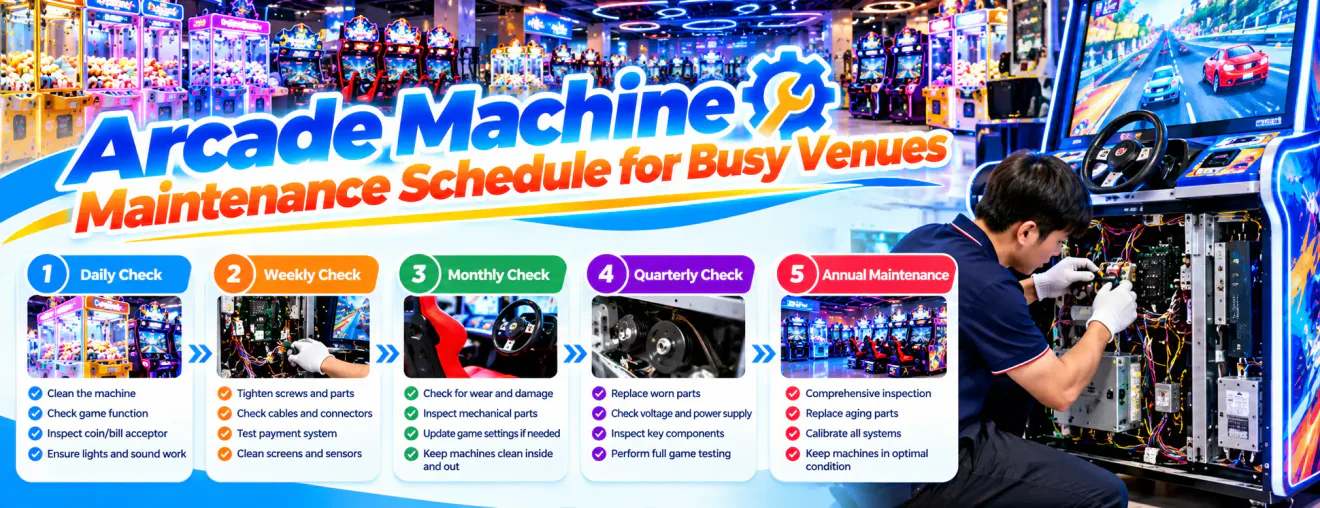
Daily Arcade Machine Checks
Inspect the Playing Area
Before opening, staff can look for visible damage, loose exterior parts, blocked access, and unusual conditions around each cabinet.
Keep walkways and service areas clear according to the venue's safety procedures.
Test Basic Gameplay
Confirm that machines start correctly and that visible displays, buttons, and relevant player controls respond normally.
For machines with moving components, use only the normal operator checks described in the manual.
Check Payment and Prize Functions
Where fitted, verify that coin, token, or card payment functions behave as expected during an authorized test.
Check ticket dispensers, prize delivery areas, and other accessible features relevant to each model.
Clean High-Touch Surfaces
Clean buttons, handles, control panels, and other frequently touched surfaces with materials approved for the equipment.
Avoid spraying liquids into electrical openings or using chemicals that may damage screens and cabinet finishes.
Weekly Maintenance Tasks
Review Machine Error Reports
Collect fault notes from floor staff and look for repeated problems affecting the same machine.
A recurring issue may need more detailed investigation than a simple restart.
Inspect Accessible Mechanical Parts
Where the manufacturer permits operator inspection, check accessible mechanisms for unusual noise, wear, or inconsistent movement.
Internal servicing and electrical work should be assigned to appropriately qualified personnel.
Check Prize and Ticket Areas
Review accessible prize compartments, ticket paths, and replenishment needs according to the equipment instructions.
Poorly arranged prizes or depleted supplies can affect the visitor experience even when the machine itself is working.
Verify Cleaning and Ventilation
Check that accessible vents are not obstructed and that dust has not accumulated around external openings.
Any internal cleaning should follow the manufacturer's isolation and servicing procedures.
Monthly Maintenance Reviews
Examine Maintenance Records
Review completed checks, reported faults, repair dates, and machines that required repeated attention.
This helps managers decide which issues need supplier support or a more detailed service visit.
Review Spare Parts Inventory
Check stock levels for approved consumables and commonly needed replacement parts based on actual machine requirements.
Avoid purchasing incompatible parts solely because they appear similar to existing components.
Confirm Configuration Records
Maintain records of approved payment settings, operating parameters, and other configurable functions.
Changes should be authorized and documented so staff can understand when and why adjustments were made.
Maintenance Priorities by Game Type
Claw and Prize Machines
Monitor the movement and response of the claw mechanism during normal gameplay and check accessible prize delivery areas.
Use the model manual for permitted adjustments and servicing rather than changing settings without a documented reason.
Racing and Motion Games
Pay attention to steering response, pedals, displays, and unusual movement or sounds where motion features are installed.
Stop using equipment that shows a potentially unsafe mechanical or electrical fault until it has been assessed.
Redemption and Sports Machines
Check scoring response, sensors, ticket delivery, and accessible moving elements according to the machine's design.
Keep a record of recurring sensor or dispensing faults to support accurate troubleshooting.
Children's Rides
Follow the manufacturer's specific operating and safety checks, including any applicable restraint or stop-control inspections.
Do not return a ride with a suspected safety issue to service before appropriate assessment and corrective action.
Create a Clear Fault Reporting Process
Make Problems Easy to Report
Provide staff with a simple way to record machine identification, fault symptoms, time, and immediate actions taken.
Clear descriptions help technicians and suppliers investigate problems without relying on vague recollections.
Separate Minor Issues From Safety Concerns
A cosmetic issue and a suspected electrical hazard require different responses.
Define which faults require immediate shutdown, isolation, and qualified assessment under venue procedures.
Manage Maintenance Costs
Track Downtime and Repair Frequency
Compare how often individual machines are unavailable and what repairs they require.
Patterns over time can help identify equipment needing attention, without assuming every failure has the same cause.
Budget for Routine Service
Allow for cleaning materials, approved spare parts, technician visits, and expected consumables.
Maintenance spending should be reviewed alongside usage and the operational importance of each machine.
How EPARK Supports Equipment Planning
EPARK supplies commercial arcade equipment for operators, distributors, and entertainment projects. Buyers can discuss equipment selection, operating requirements, and available product documentation before ordering.
For existing venues, reviewing machine categories and operating needs can help identify suitable options for replacement or expansion. Model-specific service requirements should be confirmed during purchasing.
Frequently Asked Questions
How Often Should Arcade Machines Be Checked?+
Basic visual and operational checks are commonly planned daily, while more detailed tasks may be scheduled weekly or monthly. Always follow model-specific instructions and applicable safety requirements.
Can Venue Staff Perform All Maintenance?+
No. Staff may carry out authorized routine checks, but internal electrical work and specialized repairs should be handled by appropriately qualified personnel.
What Should a Maintenance Log Include?+
Record the machine ID, inspection date, observed condition, fault details, actions taken, responsible person, and return-to-service status where relevant.
Does Preventive Maintenance Eliminate Breakdowns?+
No. It helps identify some issues earlier and supports more consistent operations, but unexpected component failures can still occur.
Conclusion
A useful arcade machine maintenance schedule combines daily checks, weekly reviews, periodic servicing, and clear fault reporting. It should be tailored to each machine's design and the venue's actual operating conditions.
By keeping accurate records and following manufacturer instructions, arcade operators can make maintenance decisions more consistently and support a better visitor experience.