How Arcade Factories Manage OEM Branding and Customization
Discover how arcade machine factories manage OEM branding, from artwork approval and cabinet customization to production checks and repeat orders.
Introduction
OEM branding allows arcade equipment distributors, entertainment venue operators, and project investors to develop machines that reflect their business identity. Instead of relying entirely on standard cabinet graphics, buyers can discuss available options for logos, artwork, colors, and other visual details.
However, arcade machine customization involves more than placing a logo on a cabinet. The factory must consider machine dimensions, printing materials, artwork positioning, production requirements, and the consistency of the finished equipment.
For international buyers, understanding how arcade factories manage OEM branding can help improve communication, reduce design revisions, and make the manufacturing process more predictable. This guide explains the main stages from initial branding requirements to production approval and future repeat orders.
Understanding OEM Branding Requirements
Define the Purpose of Customization
Before discussing artwork, buyers should explain why the machines need customization. A distributor may want equipment carrying its own commercial brand, while an FEC operator may need machines that match an existing entertainment venue.
The intended application influences the design requirements. Equipment for a themed family entertainment center may need coordinated colors and graphics, while products intended for resale may require a more flexible branding approach.
Identify Available Branding Options
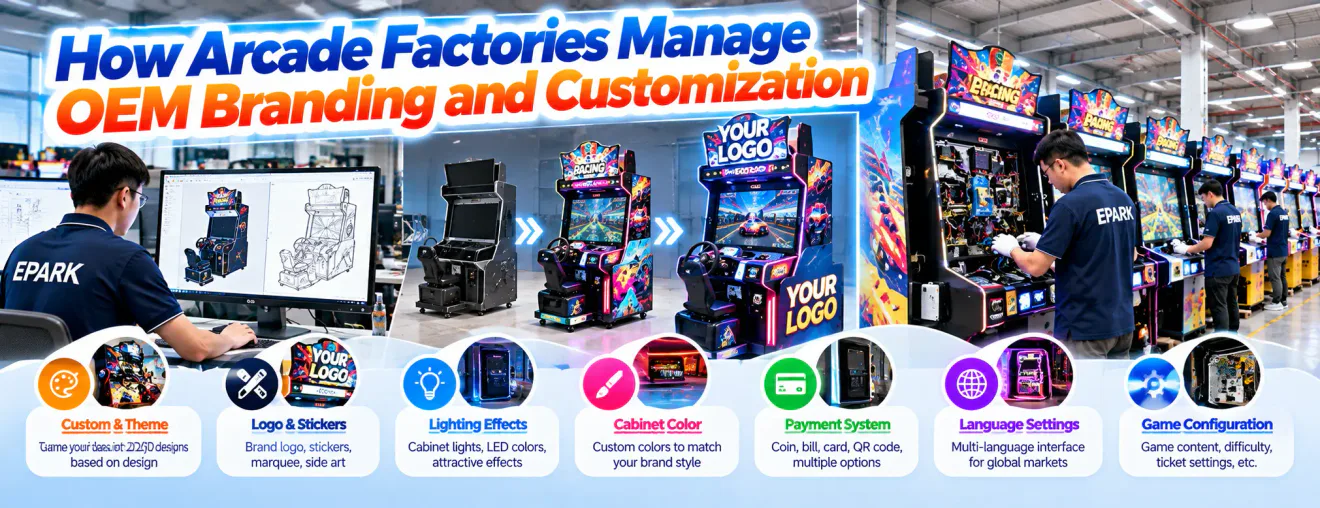
Depending on the model, OEM branding may include cabinet logos, decorative stickers, color adjustments, illuminated signage, or customized exterior graphics. Some machines may also support language or interface changes as separate configuration options.
Not every product supports the same modifications. Buyers should ask the manufacturer which surfaces and components can be customized without affecting machine structure, operation, or maintenance access.
Establish the Project Scope
A clear project brief should identify the machine models, order quantities, intended market, branding requirements, and expected delivery schedule. This information allows the factory to evaluate the customization request before preparing design materials.
The buyer should also clarify whether the project involves one customized machine, several different models, or a coordinated equipment collection. A multi-model project may require additional work to maintain a consistent visual identity.
Preparing Artwork for Arcade Machines
Collect Brand Assets
OEM branding normally begins with the buyer providing the relevant logo, brand colors, and other approved visual materials. High-quality source files make it easier to prepare graphics that fit the machine cabinet.
Buyers should confirm that they have the necessary rights to use any logos, characters, images, or other protected materials included in the artwork. The manufacturer should not assume that supplied graphics are automatically authorized for commercial reproduction.
Match Artwork to Cabinet Dimensions
Arcade cabinets have different shapes, curves, panels, and decorative structures. Artwork designed for one machine may not fit another model without adjustment.
The design team should consider the dimensions of printable surfaces, panel joints, ventilation openings, doors, controls, and other functional areas. Graphics should not obstruct safety labels, service access, or important machine functions.
Prepare Production-Ready Files
Artwork intended for commercial printing should be prepared according to the factory's file requirements. These may include suitable resolution, color information, print dimensions, and production margins.
Reviewing and Approving Custom Designs
The factory and buyer should agree on the final artwork version before printing. Clear file names and revision records help prevent outdated graphics from being used during production.
Create a Visual Design Preview
A digital preview can help buyers understand how the proposed branding will appear on the arcade cabinet. Depending on the project, the manufacturer may provide a graphic mockup, product rendering, or another suitable design reference.
The preview should reflect the actual machine structure as closely as practical. It should not imply that physical dimensions, controls, or cabinet components will change unless those modifications are included in the agreed project scope.
Check Logo Placement and Readability
A logo may appear clear on a computer screen but become difficult to recognize when applied to a curved or narrow cabinet panel. Buyers should evaluate its position, scale, contrast, and visibility.
The design should also consider how the machine will be viewed inside an entertainment venue. Important branding elements should remain recognizable without interfering with gameplay information or product controls.
Confirm the Final Design
Before production begins, the buyer should approve the relevant artwork, colors, branding positions, and any additional customization requirements. Written confirmation provides a common reference for the factory and customer.
Late design changes can affect printing arrangements, material preparation, production schedules, and costs. Establishing a clear approval stage helps reduce unnecessary revisions after manufacturing has started.
Managing Colors and Printing Materials
Understand Color Matching
Colors displayed on a computer monitor may differ from the appearance of printed materials. Lighting conditions, printing methods, surface finishes, and material characteristics can influence the final result.
Buyers with strict branding requirements should provide suitable color references and discuss the factory's available matching process. Exact visual consistency should not be assumed without confirming the relevant production method.
Choose Suitable Graphic Materials
Arcade machine graphics may be applied to metal panels, plastic covers, or other cabinet surfaces. The appropriate material depends on the product design, printing process, and intended operating environment.
Commercial entertainment equipment is frequently touched and cleaned, so graphic materials should be evaluated for their intended application. Buyers should discuss available finishes and care requirements with the manufacturer.
Review Surface Finishes
Glossy, matte, and other available finishes can produce different visual effects under arcade lighting. A finish that looks attractive in a product rendering may appear different inside a brightly illuminated entertainment venue.
The chosen finish should complement the cabinet design while remaining practical for cleaning and maintenance. Any special surface treatment should be confirmed as part of the approved customization specification.
Coordinating Branding With Machine Functions
Protect Gameplay and Controls
If a design requires changes near control areas, the factory should review the proposed layout before production. Visual customization should not compromise the intended operation of the machine.
Custom graphics should not interfere with buttons, joysticks, steering wheels, payment devices, or other player interfaces. The original operating functions must remain accessible and understandable.
Consider Language and Interface Options
Some international projects require different interface languages or localized operating information. These requirements should be discussed separately from exterior artwork because they may involve software or configuration changes.
Language availability depends on the model and game system. Buyers should confirm supported options and review any translated text before the final configuration is approved.
Maintain Service and Safety Access
Arcade machines require access to certain components for inspection and maintenance. Branding materials should not cover necessary ventilation areas, access panels, warning information, or identification labels.
The factory should consider these requirements when preparing artwork positions. A visually attractive cabinet must also remain practical for commercial operation and future servicing.
Maintaining Consistency During Production
Use Approved Artwork References
Once customization is approved, the factory should use the confirmed design files as the reference for production. This is particularly important when several machines require identical branding.
Clear artwork identification helps production staff distinguish between different customers, cabinet versions, and design revisions. It also reduces the possibility of applying the wrong graphics to a machine.
Check Branding During Assembly
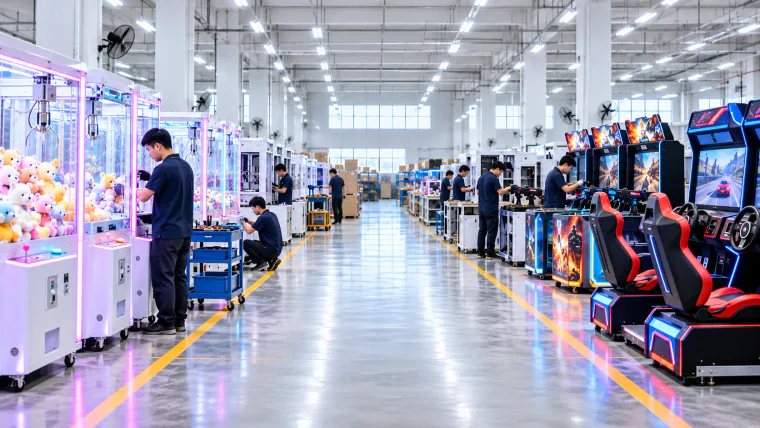
Visual inspection can help identify problems with graphic positioning, color consistency, surface condition, and cabinet appearance before the finished machine is packed.
The inspection scope should reflect the agreed customization requirements. Buyers may request relevant photographs or other confirmation materials according to the supplier's process and purchase agreement.
Review Finished Equipment
Before shipment, customized machines should be compared with the approved artwork and product configuration. This allows obvious discrepancies to be identified while the equipment is still at the factory.
For large orders, maintaining consistent branding across multiple units can help distributors present a unified product range and allow FEC operators to establish a recognizable venue identity.
Planning OEM Branding for Future Orders
Maintain Design Records
Distributors may reorder successful arcade models after the first shipment. Keeping approved artwork, machine configurations, and relevant production references can make future communication easier.
Design records should clearly identify the model and version to which they apply. A graphic prepared for one cabinet revision may require adjustment if the manufacturer later changes the exterior structure.
Prepare for Multiple Machine Categories
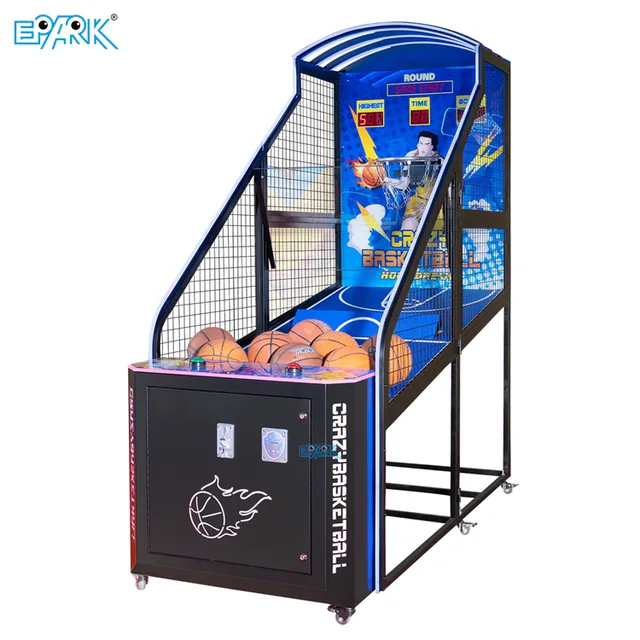
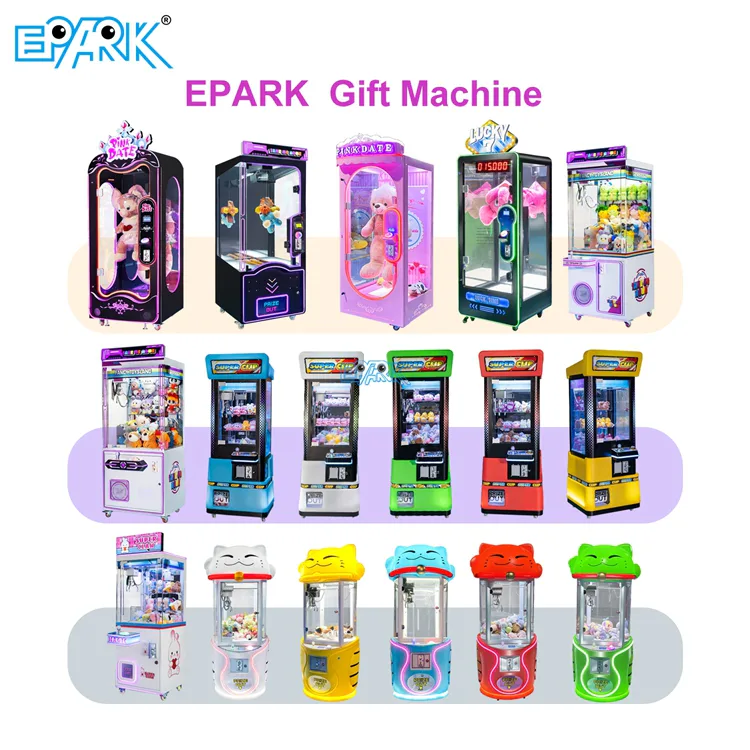
An entertainment venue may combine racing machines, claw machines, redemption equipment, sports games, and other attractions. Coordinated branding can help these different products feel connected within the same business environment.
However, every machine category has its own cabinet design and functional requirements. A consistent brand identity does not mean using exactly the same artwork dimensions or layout on every product.
Coordinate With an Experienced Manufacturer
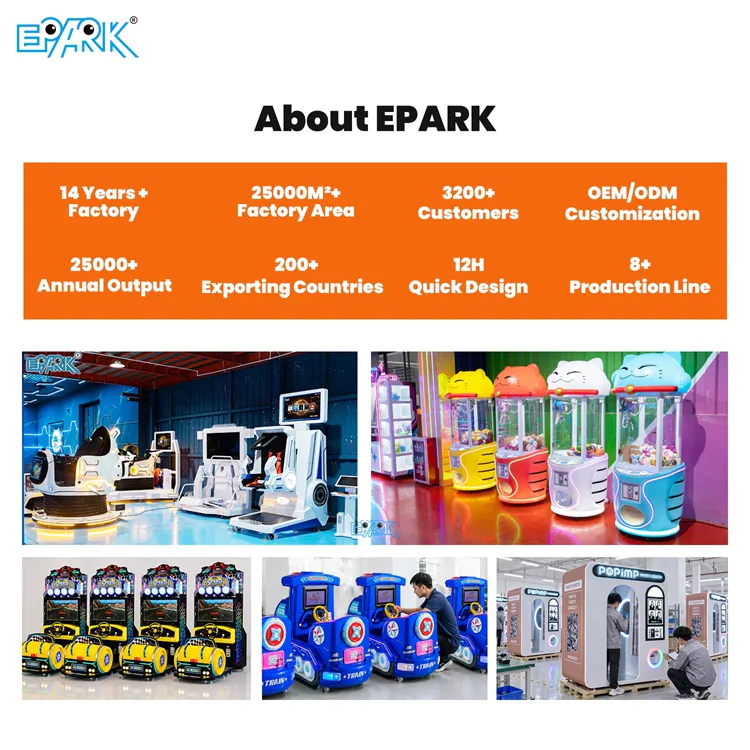
EPARK is a Guangzhou-based arcade machine manufacturer providing commercial entertainment equipment for distributors, importers, arcade operators, and FEC investors.
EPARK supports OEM and ODM discussions involving available cabinet branding, artwork, colors, logos, equipment configurations, and project requirements. Buyers can also discuss equipment selection, layout planning, production, quality checks, export packing, and after-sales assistance. Specific customization options should be confirmed for each model.
Frequently Asked Questions
Can Arcade Machines Be Customized With My Company Logo?+
Many commercial arcade machines offer branding options, but availability depends on the model and cabinet design. Buyers should confirm suitable logo positions, artwork requirements, pricing, and order conditions with the manufacturer.
Can Different Arcade Machines Use the Same Brand Design?+
Yes, a coordinated visual identity can be developed across different machine categories where customization is supported. Artwork may need to be adjusted for individual cabinet dimensions, controls, and functional areas.
Does OEM Branding Increase Production Time?+
Customization can require additional artwork preparation, approval, material sourcing, or printing work. The effect on lead time depends on the project scope and should be confirmed before the order is finalized.
What Should Buyers Approve Before Custom Production?+
Buyers should confirm the machine model, logo artwork, graphic positions, colors, available material finishes, quantities, and any additional configuration requirements. Written approval helps reduce misunderstandings during production.
Conclusion
OEM branding allows commercial arcade buyers to develop equipment that better reflects their business identity. Successful customization requires coordination between the buyer and manufacturer, from artwork preparation and design approval to printing, assembly, and final inspection.
For distributors and FEC operators, clear customization requirements and organized design records can also support future orders. Working with a manufacturer that understands both cabinet design and commercial equipment requirements helps create a more consistent purchasing process.