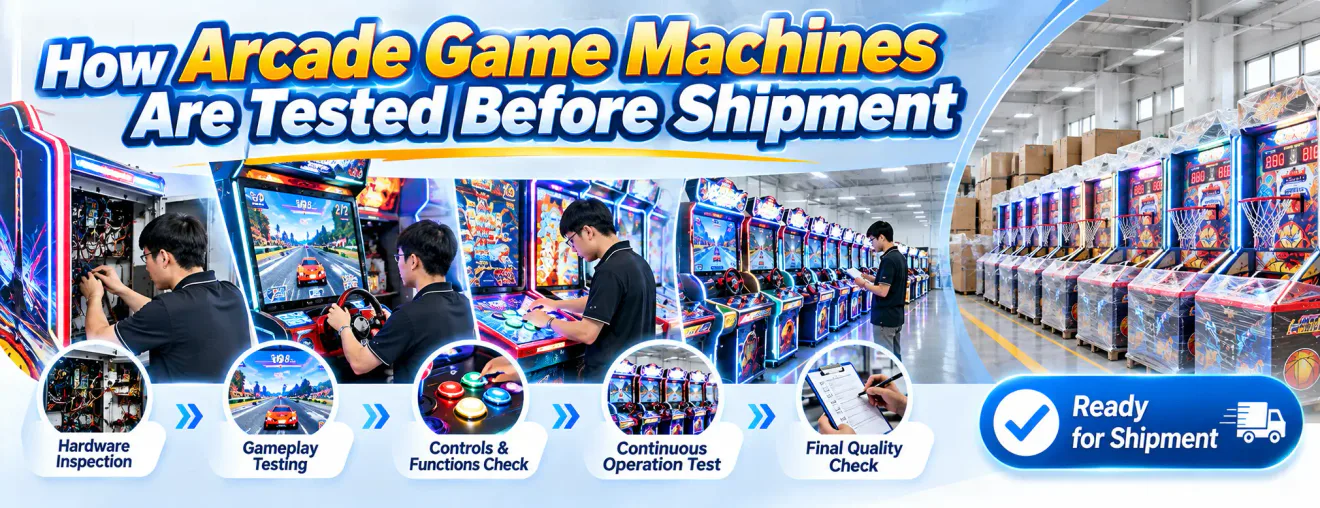
How Arcade Game Machines Are Tested Before Shipment
Learn how arcade game machines are tested before shipment, from functional checks and component inspection to final quality verification for commercial entertainment projects.
Introduction
Buying arcade game machines involves more than selecting attractive products. For arcade operators, distributors, and entertainment project investors, understanding factory testing helps evaluate equipment readiness before shipment.
A structured inspection can help identify functional issues, verify order configurations, and prepare machines for international delivery. The exact checks depend on the model and agreed specifications.
Why Pre-Shipment Testing Matters
Identifying Functional Issues
Arcade machines contain components such as displays, buttons, sensors, motors, speakers, and control systems. Problems with individual components may affect gameplay or prevent normal operation.
Testing before shipment gives the factory an opportunity to identify and address issues before the equipment leaves the production site.
Supporting Commercial Operations
Unexpected equipment problems can affect installation schedules and venue opening plans. Pre-shipment checks help buyers understand what has been inspected before dispatch.
Testing cannot guarantee that no problem will occur later, but it forms an important part of equipment quality management.
Confirming Order Requirements
A machine may work correctly but still fail to meet the order if its artwork, payment system, language, or electrical configuration is incorrect.
Comparing the finished machine with written specifications helps reduce misunderstandings, particularly for customized and bulk orders.
Preparing Arcade Machines for Testing
Reviewing Product Specifications
Before testing begins, staff should confirm the model and its agreed configuration. Relevant details may include player capacity, screen arrangement, controls, and customization requirements.
Using confirmed specifications provides a consistent reference for the inspection process.
Inspecting the Cabinet
The team can check cabinet panels, artwork, doors, protective covers, and visible surfaces for obvious damage or assembly issues.
Customized logos, colors, and graphics should also be compared with the approved design before the machine proceeds to packing.
Checking Components and Connections
Depending on the model, inspection may include wiring, connectors, buttons, joysticks, motors, sensors, speakers, and display connections.
The checklist should reflect the actual equipment rather than assuming every arcade machine contains identical components.
Functional Testing by Game Category
Testing Racing Game Machines
Racing machines may include steering wheels, pedals, seats, displays, and speakers. Testing should confirm that player inputs are recognized and the game responds as expected.
For motion-enabled models, relevant movement functions should be checked according to the product specifications.
Testing Interactive Games
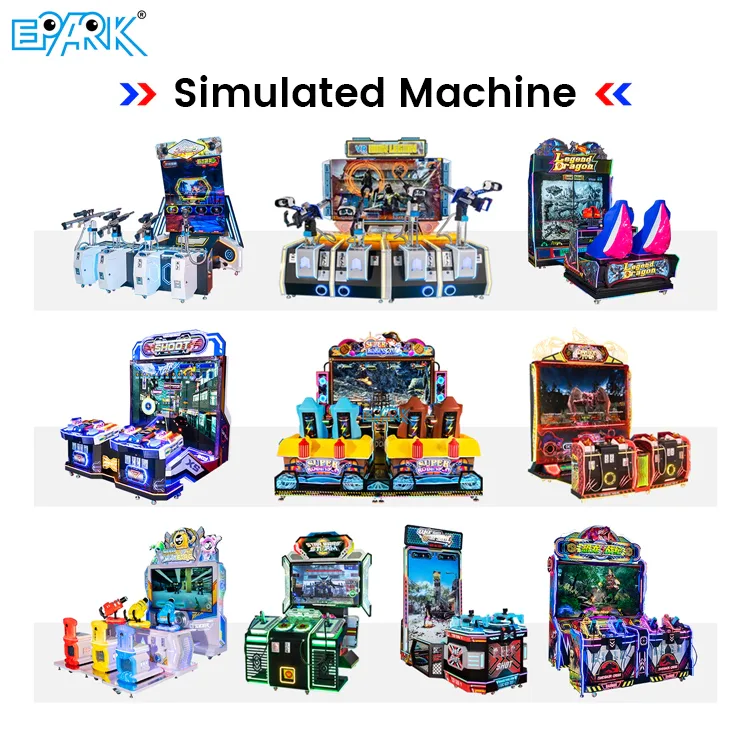
Interactive machines may use simulated controllers, buttons, sensors, touchscreens, or other input devices. Staff should verify that the installed controls operate correctly.
The inspection should cover the functions included with the selected model rather than assuming all machines share the same features.
Testing Sports and Redemption Games
Basketball, boxing, ball-throwing, and redemption machines use different operating mechanisms. Checks may include sensors, scoring, display feedback, and ticket functions where fitted.
Testing should reflect the actual gameplay and the features confirmed in the order.
Testing Claw Machines
Claw machines may contain motors, movement controls, claw mechanisms, sensors, lighting, and payment components. The factory can check whether the mechanism and control interface respond as intended.
Any model-specific settings should be checked against the agreed configuration.
Testing Children's Rides
Children's rides require checks suited to their design. Depending on the model, these may include start and stop controls, movement, sound, lighting, and applicable safety-related components.
Testing should follow the manufacturer's instructions and relevant requirements for the equipment.
Checking Displays, Sound, and Software
Confirming Screen Performance
The team should check that each display powers on and shows the intended content during operation. Machines with multiple screens require checks of each relevant display.
The screen arrangement should also match the confirmed product configuration.
Checking Sound and Lighting
Factory staff can verify that speakers produce sound and installed lighting responds as expected during normal operation.
Sound levels and lighting effects vary by model, so checks should focus on the functions included in the specifications.
Reviewing Game Operation
A basic operating check should confirm that the machine starts, reaches the intended interface, accepts player input, and completes the relevant gameplay sequence.
Staff should watch for obvious error messages, unexpected shutdowns, or inconsistent responses.
Verifying Payment and Customization
Checking Payment Compatibility
Commercial venues may use coin acceptors, card readers, tokens, or other payment arrangements. Compatibility should be confirmed before the order is finalized.
The factory should check the payment components included in the order and verify their relevant functions where practical.
Confirming Language and Branding
International buyers may request different interface languages, cabinet artwork, logos, or stickers. These details should match the approved design and written order requirements.
Keeping approved artwork and configuration records gives both parties a clear reference for inspection.
Reviewing Electrical Requirements
Voltage, plug type, and other electrical requirements may vary by destination market. Buyers should communicate their requirements before production begins.
The finished machine should be checked against the agreed configuration and relevant product documentation.
Final Quality Inspection Before Packing
Reviewing Appearance and Assembly
After functional testing, staff can inspect visible surfaces, panel fit, artwork alignment, and exterior parts for noticeable problems.
Any identified issue should be addressed according to the factory's quality procedures and the order requirements.
Checking Accessories
Some machines require separate cables, keys, control components, or installation materials. The exact items depend on the product and purchase agreement.
A packing checklist helps confirm that required accessories are prepared with the correct machine.
Matching Machines to the Order
For bulk orders, checking model identification and quantities helps prevent mix-ups. Customized units should also be matched with their intended artwork and configuration.
Clear labels and organized packing records make it easier to identify equipment after delivery.
Export Packing and Shipment Preparation
Protecting Equipment During Transport
Arcade machines may contain large cabinets, displays, moving parts, or delicate finishes. Packing methods should suit the equipment and shipping arrangement.
Appropriate protective materials and outer packaging can help reduce the risk of transport damage.
Preparing Shipping Information
Export orders may require packing lists, product descriptions, quantities, dimensions, and weights. These details should be checked against the actual shipment.
Buyers should confirm documentation requirements with their supplier and logistics provider before dispatch.
Recording Inspection Results
Depending on the order arrangement, buyers may request inspection photos, testing videos, or a final checklist before shipment.
The inspection scope and available evidence should be agreed in advance, especially for customized projects and large orders.
What Buyers Should Ask an Arcade Machine Factory
Ask About Model-Specific Tests
Not every machine uses the same components or testing procedure. Buyers should ask which functional checks apply to their selected models.
A clear explanation of actual inspection procedures is more useful than a general claim about quality.
Confirm Inspection Requirements in Writing
Buyers should clarify inspection scope, product specifications, and acceptance requirements before production or shipment.
Written confirmation is particularly valuable for customized equipment and orders involving multiple product categories.
Understand After-Sales Support
Ask how the factory handles issues identified during inspection and what corrective actions may be taken before dispatch.
Buyers should also review warranty terms, technical support, and after-sales arrangements rather than relying on testing alone.
Frequently Asked Questions
Are Arcade Game Machines Tested Before Shipment?+
Testing procedures depend on the manufacturer, product type, and agreed inspection scope. Buyers should ask which functional and final checks are performed for their selected machines.
What Should Buyers Check Before Ordering in Bulk?+
Confirm specifications, quantities, customization, payment configuration, electrical requirements, packing arrangements, and warranty terms. Written confirmation helps reduce misunderstandings.
Can Buyers Request Testing Photos or Videos?+
This depends on the supplier's process and the order arrangement. Buyers can agree on the type of inspection evidence to be provided before shipment.
Does Factory Testing Guarantee There Will Be No Problems?+
No inspection process can guarantee that equipment will never develop a problem. Suitable packing, correct installation, maintenance, and after-sales support remain important.
Conclusion
Pre-shipment testing helps prepare arcade game machines for international delivery. Functional checks, configuration verification, appearance inspection, and packing preparation address different aspects of equipment readiness.
When comparing arcade machine factories, buyers should ask about model-specific testing, customization verification, export packing, warranty terms, and after-sales support. These details help distributors and venue operators make more informed purchasing decisions.