How to Plan an Arcade Game Mix for Your Entertainment Venue
Learn how to plan an arcade game mix for your entertainment venue by evaluating floor space, target visitors, game categories, customer flow, budget, and future expansion.
Introduction
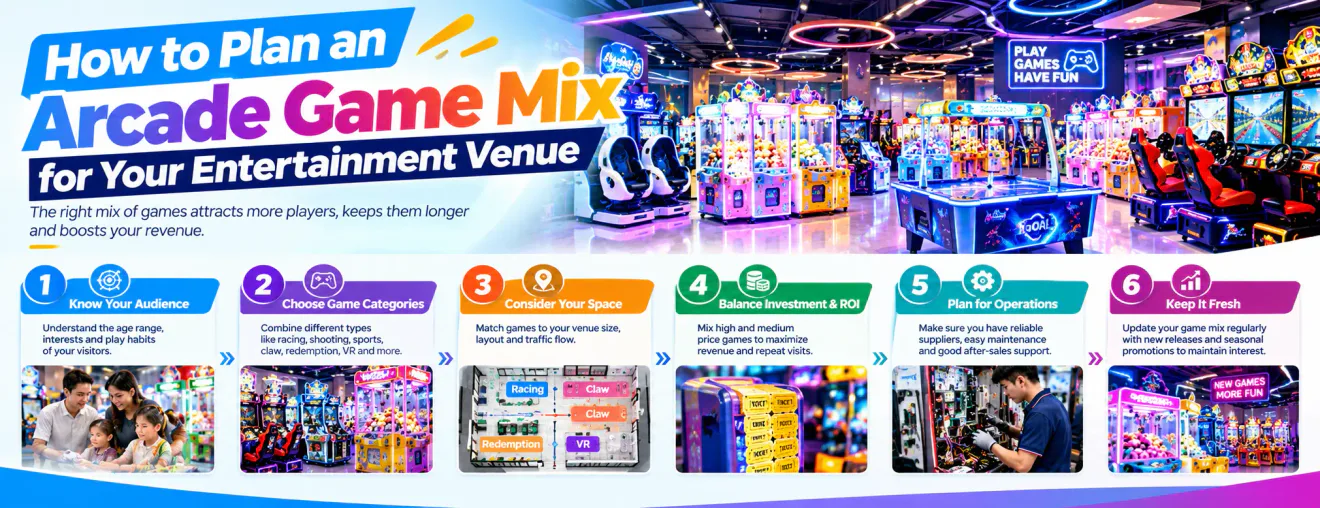
Planning an arcade venue involves more than choosing popular machines. The game mix should reflect available floor space, target visitors, budget, and the entertainment experience the business intends to provide.
A practical plan helps operators avoid overcrowding, balance game categories, and make equipment decisions before placing orders. It also creates a clearer basis for discussing the project with a manufacturer.
Define the Purpose of the Venue
Choose a Business Model
A family entertainment center may combine children's rides, redemption games, claw machines, racing simulators, and interactive attractions. A compact mall arcade may need fewer machines that attract attention and fit a limited footprint.
A venue focused on competitive gaming may prioritize racing, sports, and multiplayer experiences. Define the business model first so individual machine choices support one consistent concept.
Set Clear Objectives
Decide whether the venue should focus on family visits, group activities, prize redemption, immersive experiences, or a mixture of these. Clear objectives help determine which categories deserve the most space and investment.
Avoid selecting machines only because they look impressive in a catalog. Each category should have a clear role in the visitor experience and fit the operating plan.
Understand Your Target Visitors
Consider Age Groups
Children, teenagers, adults, and families may have different expectations for game difficulty, physical interaction, and play duration. Children's rides may suit younger visitors, while racing and sports attractions can appeal to older players.
Family-oriented venues benefit from activities that different age groups can enjoy during one visit. Choose categories that match the visitors the business realistically expects to attract.
Plan for Social Play
Arcade entertainment is often shared with friends or family. Multiplayer racing games, air hockey, basketball games, and other competitive attractions can encourage interaction.
Single-player games can still be valuable when they offer a distinctive experience. Aim for a mix of individual and group activities rather than relying on one play style.
Measure the Available Floor Space
Record Site Measurements
Measure the venue and identify walls, columns, entrances, exits, electrical points, storage areas, and other site conditions. These details affect where machines can be installed.
A machine's footprint is only part of its space requirement. Players need room to stand, sit, move, and use controls without blocking nearby attractions or walkways.
Calculate Usable Gaming Area
Separate total floor area from the area available for games. Reception, circulation, seating, prize counters, storage, and other functions may also need dedicated space.
Create a preliminary floor plan before choosing the final quantity of machines. This makes it easier to compare dimensions and adjust the selection before ordering.
Choose a Balanced Game Mix
Add Interactive Attractions
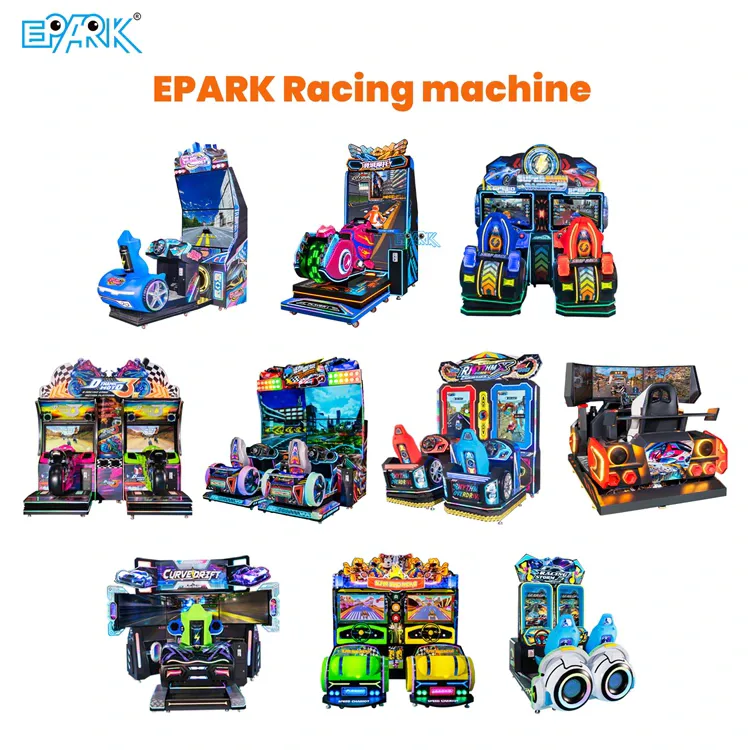
Racing simulators, sports games, and other interactive machines can create an active atmosphere. Consider their audience, player capacity, dimensions, and how each attraction complements nearby equipment.
Choose machines with different roles instead of filling the venue with products that provide almost identical experiences. Variety can make the venue more appealing to different visitors.
Consider Redemption and Prize Games
Redemption games can add a prize-based activity to a family entertainment center or arcade. Claw machines offer another form of interaction and may suit venues where prizes are part of the visitor experience.
Consider prize management, operating requirements, and applicable local rules before deciding how much space to allocate to these categories.
Evaluate Specialty Attractions
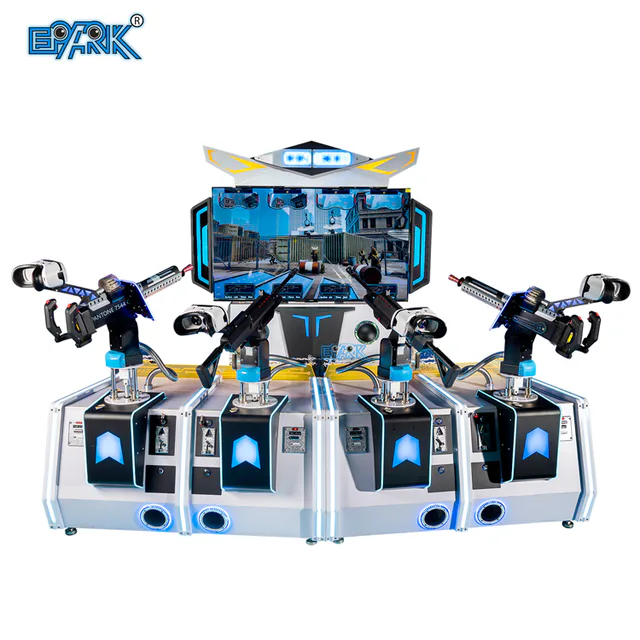
VR equipment and motion simulators can provide experiences that differ from conventional arcade games. They may help establish a distinctive identity when they match the audience and venue concept.
Specialty attractions may require additional space, supervision, installation planning, and maintenance access. Check these requirements before including them in the equipment mix.
Develop a Practical Floor Plan
Create Functional Zones
Group machines into logical zones, such as children's entertainment, racing and sports, prize games, and immersive attractions. The exact zones should reflect the products selected and the site.
Zoning can make the venue easier to navigate and help staff manage equipment. It also creates a more coherent layout than placing machines wherever space remains.
Protect Circulation and Accessibility
Visitors need clear routes between attractions, and players should be able to use machines without obstructing entrances or exits. Consider where people may gather, watch, or wait for their turn.
Include accessibility and local building and fire-safety requirements in the plan. These conditions should be reviewed before equipment is ordered.
Plan Visibility and Customer Flow
Place visually engaging attractions where they can be seen without creating congestion. Consider how visitors will discover different categories and how staff can supervise the space.
A good layout balances visibility with comfort, safety, and maintenance access. Review the visitor journey rather than judging each machine position separately.
Build a Realistic Equipment Budget
Account for Project Costs
Machine prices are only one part of the budget. Shipping, import duties, local taxes, electrical preparation, installation, signage, payment systems, and venue preparation may also affect total investment.
Costs depend on the destination market, equipment configuration, and project scope. Keep allowances for these items separate from the machine purchasing budget.
Prioritize Essential Equipment
When the budget is limited, prioritize equipment that supports the venue concept and target audience. A balanced selection of essential categories may be more useful than spending too much on a few expensive attractions.
Optional machines can be considered later if the layout and business plan allow expansion. Make sure the opening selection still provides a coherent visitor experience.
Check Technical and Operating Requirements
Review Installation Conditions
Before confirming an order, check voltage, plug type, electrical requirements, installation access, operating clearances, and maintenance access for the selected machines.
Large equipment may need additional planning for delivery routes and final positioning. Confirming site conditions early can reduce installation difficulties.
Confirm Payment and Customization
Depending on the model and market, a venue may need coin mechanisms, card systems, or other supported payment options. Confirm compatibility before production.
Customization may include cabinet artwork, logos, colors, lighting, or language settings. Available options, minimum order quantities, and lead times should be confirmed for each model.
Plan for Future Expansion
Keep the Layout Adaptable
Visitor demand and operating experience may change after opening. Where practical, design the layout so selected areas can accommodate additional machines or allow equipment to be rearranged later.
Flexibility does not mean leaving large areas unused. It means considering future options without compromising circulation, the opening layout, or essential operating space.
Review Performance Information
After opening, review participation, customer feedback, maintenance records, and other available business information. These observations can help identify categories that attract interest or need a different position.
No machine category guarantees a particular return. Results depend on location, visitor demand, pricing, operating hours, costs, and other business conditions.
How EPARK Supports Venue Planning
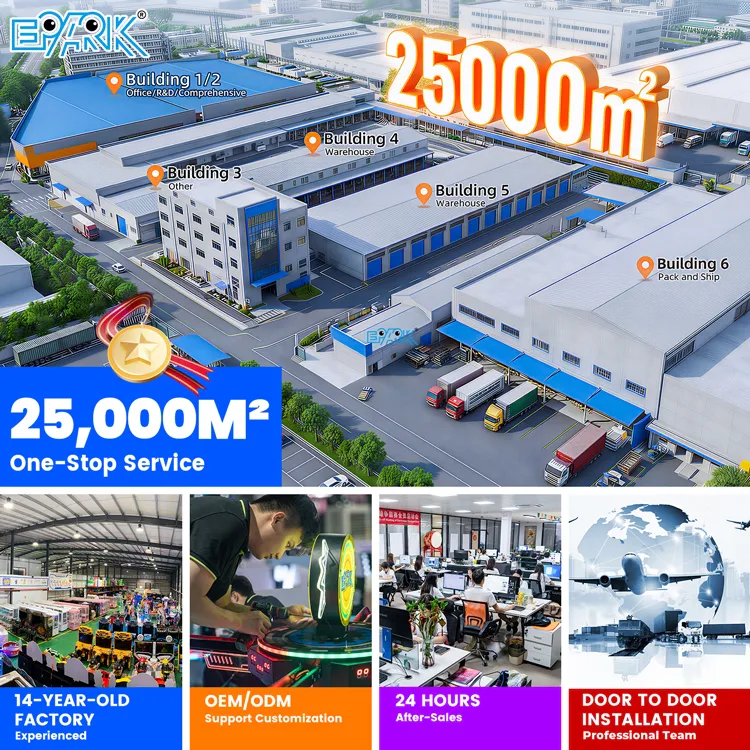
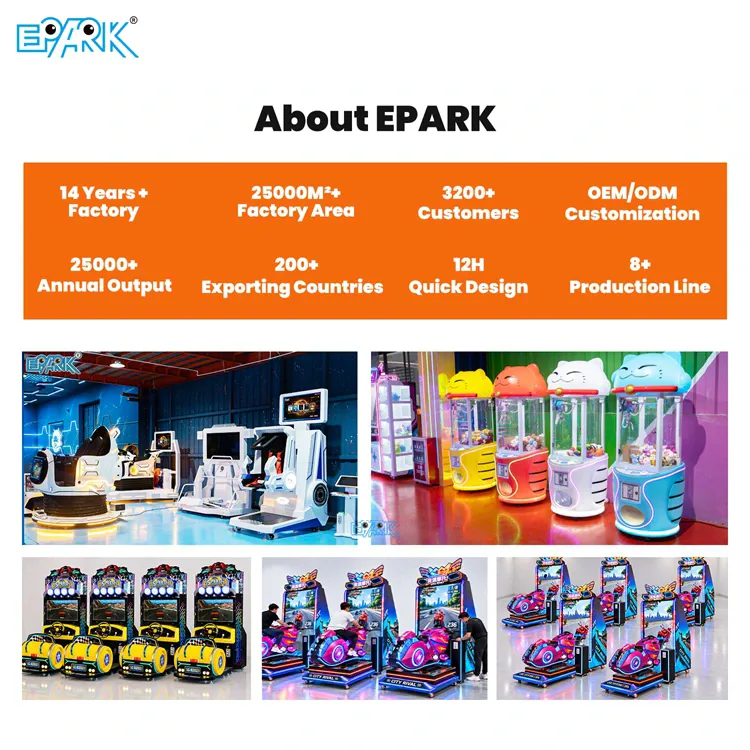
EPARK is an arcade machine manufacturer based in Guangzhou, China, supplying commercial amusement equipment to arcade operators, FEC investors, distributors, importers, and entertainment project customers.
Its product range includes racing games, sports arcade machines, claw machines, redemption games, shooting games, children's rides, VR equipment, and other entertainment attractions.
For projects with different space and business requirements, EPARK can support equipment selection and preliminary floor-plan review. Available services include 2D and 3D layout support, equipment configuration, customization discussions, production, quality checks, export packing, shipping coordination, and installation guidance.
The appropriate equipment combination depends on site dimensions, target visitors, budget, and selected machine specifications. Reviewing these details early helps establish a clearer project scope.
Frequently Asked Questions
How do I choose arcade machines for a small venue?+
Measure the usable floor area, identify the main visitor groups, and compare machine dimensions, operating space, categories, and budget. Prioritize equipment that fits comfortably and provides a meaningful variety of experiences.
How many arcade machines should a new venue have?+
There is no universal quantity. The right number depends on usable gaming area, machine dimensions, business model, target visitors, and investment budget. A scaled floor plan helps compare options before ordering.
Which arcade game categories work well together?+
Family venues may combine children's rides, interactive games, claw machines, and redemption equipment. Competitive venues may emphasize racing, sports, and multiplayer attractions. The best mix depends on the audience and site.
Should I purchase every machine before opening?+
That depends on the opening plan, budget, and expected demand. If equipment will be added in phases, consider lead times, shipping, installation, and whether the layout can accommodate future additions.
Conclusion
Planning an arcade game mix requires a coordinated approach to business objectives, visitor demographics, floor space, equipment categories, budget, and operating requirements.
The strongest plan is not necessarily the one with the most machines. It is the one that combines suitable attractions into a practical, engaging, and manageable entertainment environment.
By preparing the floor plan before confirming orders, checking each machine's role, and allowing for future review, operators can make more informed purchasing decisions. Early discussion with an experienced equipment manufacturer can help turn initial ideas into a clearer project plan.