How to Reduce Arcade Machine Downtime and Operating Costs
Learn practical ways to reduce arcade machine downtime, improve maintenance efficiency, control operating costs, and keep your FEC running smoothly.
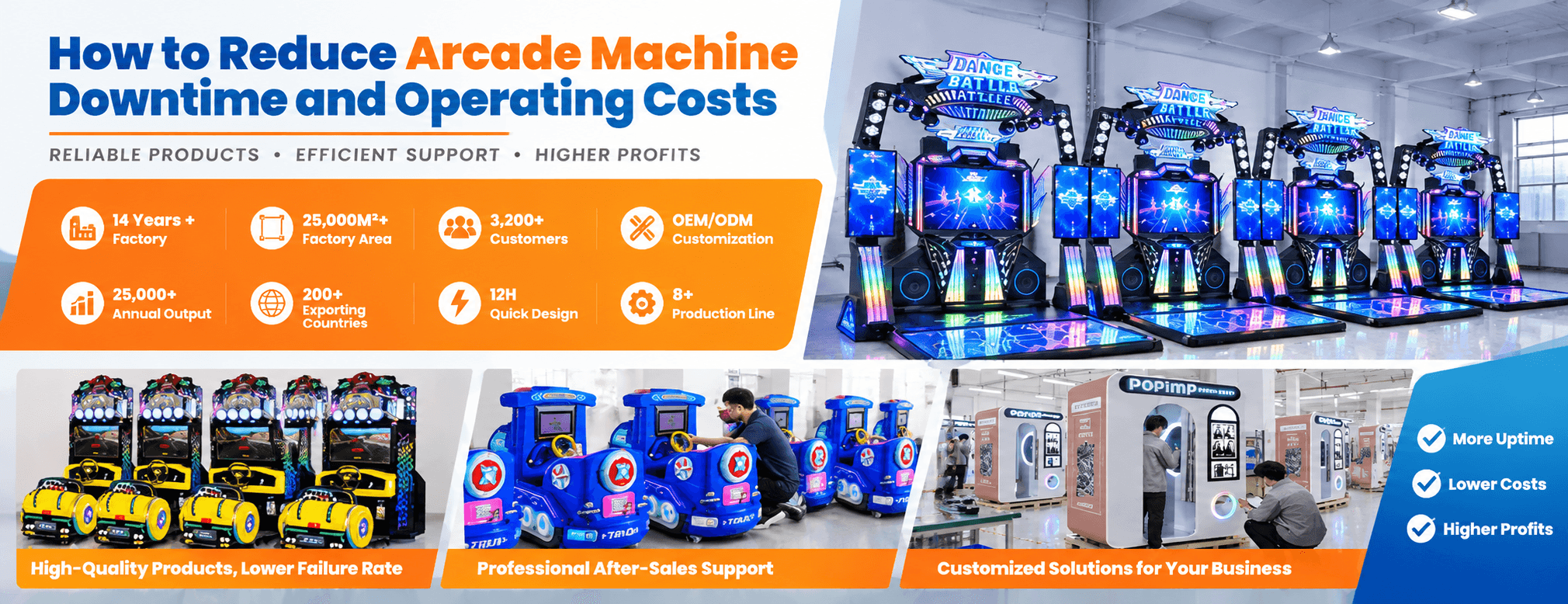
Choosing the right maintenance strategy is essential for keeping arcade venues profitable and reducing unnecessary operating costs. For FEC operators, arcade owners, and entertainment investors, equipment uptime directly affects customer experience and daily revenue.
While purchasing high-quality commercial arcade machines is important, long-term success also depends on how effectively the equipment is managed after installation.
Regular maintenance, proper staff training, spare-parts preparation, and operational monitoring can help reduce unexpected failures and extend machine lifespan.
This guide explains practical ways to reduce arcade machine downtime and improve daily operations.
1. Create a Daily Arcade Machine Inspection Routine
Small problems often become major failures if they are ignored.
Before opening the venue, staff should perform a quick inspection of all machines to identify abnormal conditions early.
Daily checks can include:
- Screen display and image quality
- Buttons, joysticks, steering wheels, and pedals
- Coin acceptors and payment systems
- Ticket dispensers and redemption functions
- Sound and lighting effects
- Moving parts and mechanical systems
- Safety components and customer-use areas
A simple inspection checklist only takes a few minutes but can prevent longer downtime during business hours.
2. Perform Regular Cleaning and Basic Maintenance
Commercial arcade machines are used by many customers every day. Dust, fingerprints, food particles, and continuous operation can gradually affect equipment performance.
Operators should create a cleaning schedule based on customer traffic.
Important areas include:
- Control panels
- Touch screens
- Buttons and joysticks
- Sensors
- Ventilation areas
- Prize mechanisms
- Seats and handles
Keeping machines clean not only improves appearance but also helps maintain stable operation.
3. Use Preventive Maintenance Instead of Emergency Repairs
Many operators only repair machines after they stop working.
However, preventive maintenance is usually more efficient because it helps identify problems before they cause complete failure.
Regular checks should include:
- Wiring connections
- Power supplies
- Cooling fans
- Sensors
- Motors
- Mechanical parts
- Payment systems
- Internal components
For machines with moving systems, such as racing simulators, VR equipment, prize machines, and redemption games, preventive maintenance is especially important.
4. Keep Common Spare Parts Available
Waiting for replacement parts can significantly increase machine downtime.
A professional arcade operation should keep commonly used spare parts available.
Typical spare parts include:
- Buttons
- Microswitches
- Joysticks
- Cables
- Power supplies
- Sensors
- LED components
- Fans
- Coin acceptors
- Ticket dispenser parts
When purchasing arcade machines, operators should ask suppliers about recommended spare parts and whether spare-part packages are available.
5. Train Staff to Handle Basic Issues
Not every machine problem requires professional technical support.
Front-line employees can often solve simple problems when they receive basic training.
Staff should understand how to:
- Restart machines safely
- Identify common error messages
- Check simple connections
- Clear ticket jams
- Report technical problems correctly
However, employees should also know when professional technical support is required.
Complex electrical or mechanical repairs should always be handled properly.
6. Record Machine Maintenance History
Keeping maintenance records helps operators understand equipment performance over time.
Useful information includes:
- Machine name
- Problem description
- Failure date
- Repair action
- Replacement parts
- Downtime duration
7. Monitor High-Usage Machines More Frequently
These records help identify frequently failing components and support better purchasing decisions in the future.
Not every arcade machine receives the same amount of customer traffic.
High-revenue machines such as racing games, claw machines, basketball machines, shooting games, and redemption equipment often require more frequent inspection.
Operators can divide machines into different maintenance levels based on usage frequency.
This allows staff to focus maintenance resources on the equipment that matters most.
8. Consider Venue Environment and Machine Placement
The operating environment can directly affect arcade machine performance.
Operators should pay attention to:
- Temperature
- Humidity
- Ventilation
- Dust levels
- Electrical stability
- Space around machines
Poor placement may make maintenance more difficult and increase repair time.
A good FEC layout should provide enough space for customers while allowing staff to access machines easily.
9. Choose Equipment Based on Long-Term Operating Cost
The lowest purchase price is not always the lowest total cost.
Operators should consider:
- Equipment reliability
- Maintenance frequency
- Spare-parts availability
- Technical support
- Energy consumption
- Expected service life
A stable commercial arcade machine can provide better long-term value than a cheaper machine requiring frequent repairs.
10. Work With a Supplier That Provides Technical Support
After-sales support plays an important role in reducing downtime.
Before purchasing equipment, buyers should understand what support the supplier provides.
Useful services include:
- Remote troubleshooting
- Operation manuals
- Maintenance guidance
- Spare parts supply
- Installation support
- Technical consultation
Fast communication with the supplier can help operators restore machines quickly when problems occur.
11. Review Machine Performance Regularly
Maintenance should also connect with business performance.
Operators should analyze:
- Revenue per machine
- Customer usage frequency
- Downtime records
- Repair costs
- Popularity among customers
This information helps determine whether machines should be repaired, relocated, upgraded, or replaced.
12. Prepare Equipment Before Peak Seasons
Busy periods such as weekends, holidays, and school vacations usually generate higher customer traffic.
Before these periods, operators should check:
- Popular machines
- Payment systems
- Redemption equipment
- Prize mechanisms
- High-use controls
Preventive preparation can reduce the risk of losing revenue during important business periods.
How EPARK Supports Arcade Operators
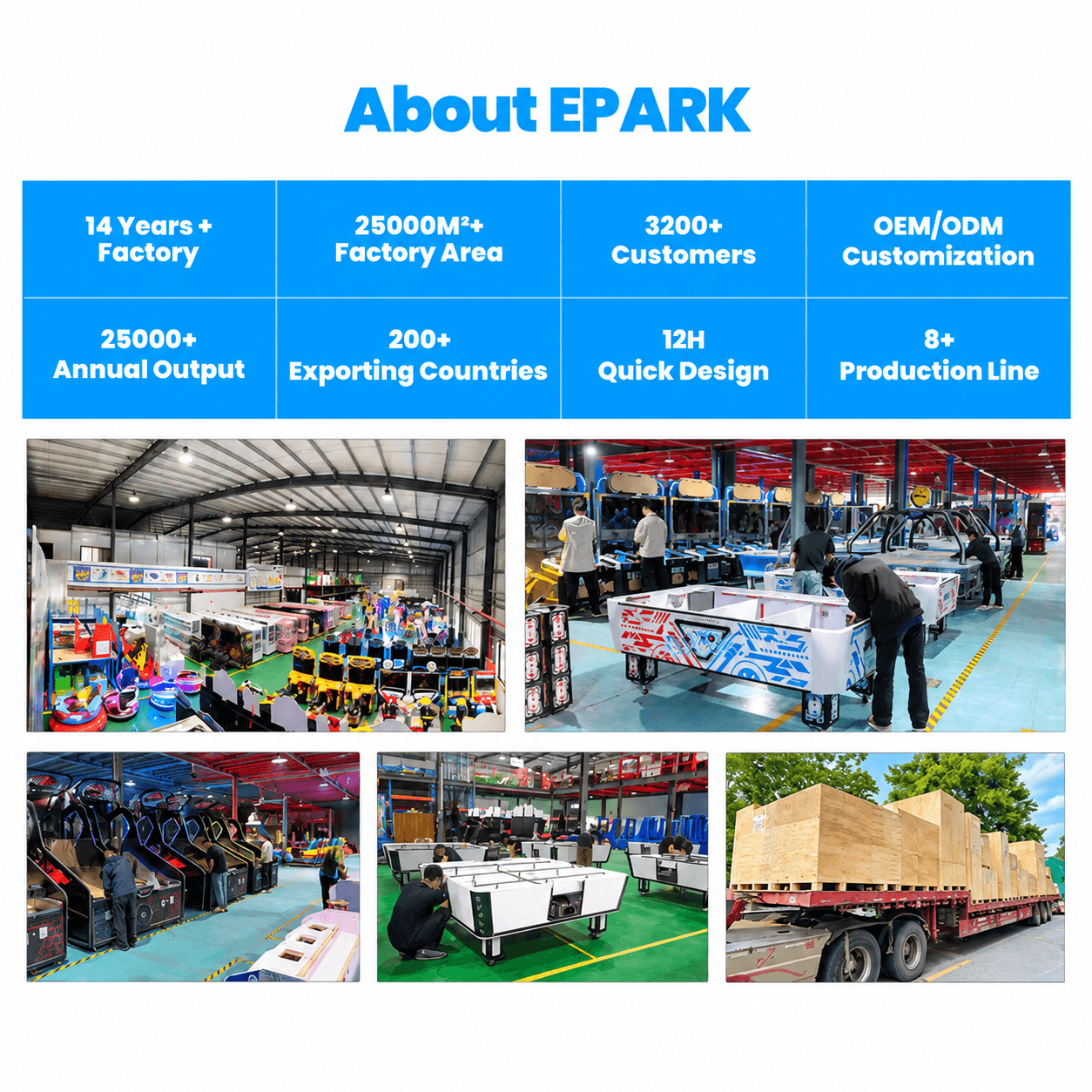
EPARK provides commercial arcade machines and one-stop entertainment solutions for FEC operators, arcade owners, distributors, and entertainment investors.
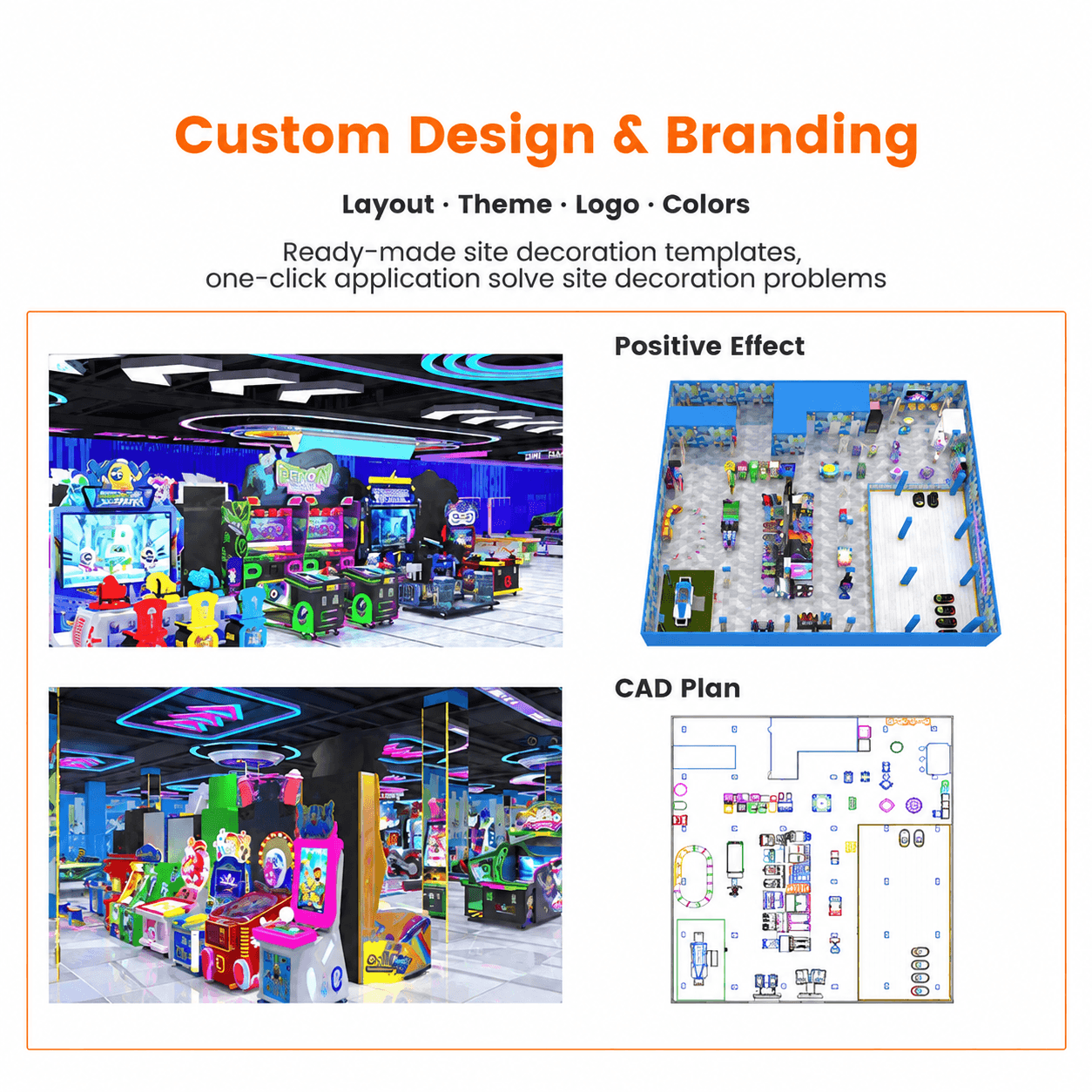
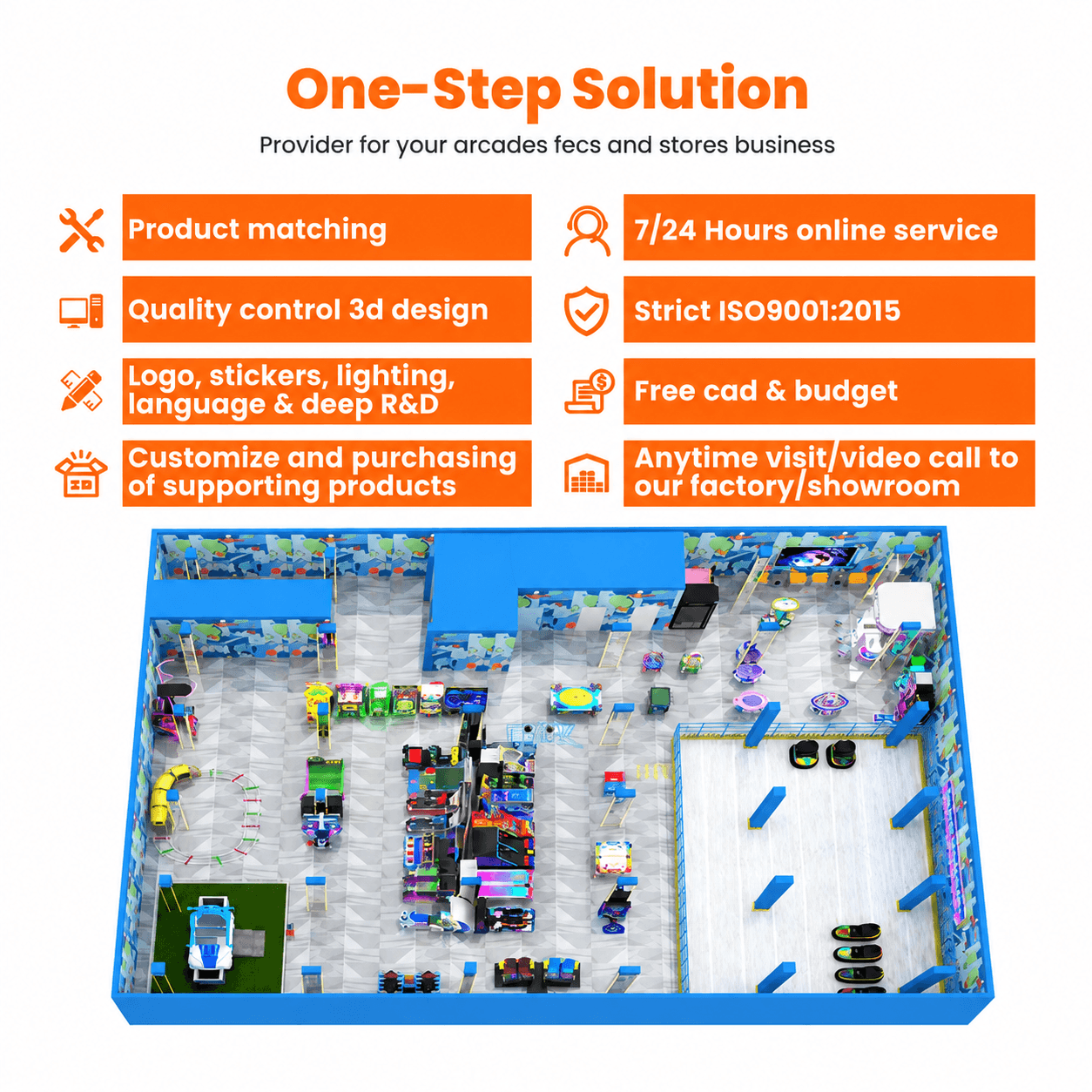
Our support includes equipment selection, venue planning, 2D and 3D layout design, production, quality inspection, shipping support, installation guidance, spare-parts support, and technical assistance.
By considering maintenance requirements during the planning stage, operators can build more efficient and sustainable entertainment venues.
FAQ
How often should arcade machines be maintained?+
High-use arcade machines should be checked daily, while detailed preventive maintenance can be scheduled based on machine type, usage frequency, and manufacturer recommendations.
What spare parts should arcade operators keep?+
Common spare parts include buttons, microswitches, cables, power supplies, sensors, LED components, payment system parts, and machine-specific replacement components.
Why is arcade machine maintenance important?+
Proper maintenance helps improve machine availability, reduce repair costs, extend equipment lifespan, and provide customers with a better entertainment experience.
How can FEC operators reduce arcade machine downtime?+
Operators can reduce downtime through regular inspections, preventive maintenance, staff training, spare-parts preparation, maintenance records, and reliable technical support.
Conclusion
Reducing arcade machine downtime requires consistent daily management rather than only reacting after failures happen.
Through regular inspections, preventive maintenance, staff training, spare-parts planning, and performance monitoring, FEC operators can improve equipment reliability and control operating costs.
For entertainment businesses, keeping machines available during operating hours is one of the most important factors for maintaining customer satisfaction and long-term revenue.